

PFT and Spirometry CPT Codes: 94010 to 94729 and 94660 Explained
How to code spirometry, PFT panels, DLCO, 6 minute walk and oximetry: 94010, 94060, 94726, 94729, bundling, 26/TC and denials.
Quick answer: the main PFT and spirometry codes
Basic spirometry is 94010, pre- and post-bronchodilator spirometry is 94060, lung volumes are 94726 (plethysmography) or 94727 (gas dilution), and diffusing capacity is the 94729 add-on. Codes such as 94375 flow-volume loop, 94760 and 94761 oximetry, and 94660 CPAP management are usually included in something else rather than paid alone.
- 94010 is basic spirometry, 94060 adds the bronchodilator comparison and includes the drug administration
- 94726 and 94727 are lung volume methods, 94729 is a diffusing capacity add-on
- 94375, 94760, 94761 and 94660 often bundle and should not be billed on reflex
- Use 26 or TC only when the PFS allows a split and you provide only one component
PFT and Spirometry Coding Explained
A pulmonary function test (PFT) claim is built from separate code families: spirometry (94010, 94060), lung volumes (94726, 94727), diffusing capacity (94729), exercise tests such as the six minute walk (94618), and treatments such as nebulizer therapy (94640). The CMS National Correct Coding Initiative (NCCI) policy manual says the PFT codes include both comprehensive and component codes, so a claim can be correct on every code and still lose lines to bundling. This page describes what each code reports and the NCCI rules that matter, using the Chapter 11 manual effective 1/1/2026.
Medsure RCS codes and bills pulmonology practices with these rules in view, checking panels against bundling edits, diagnosis support and the professional and technical split before claims go out. You will also find links to our respiratory ICD-10 codes, our CPT coding overview, and the medicine section of our CPT code guides.
Spirometry Coding
How is Spirometry coding done?
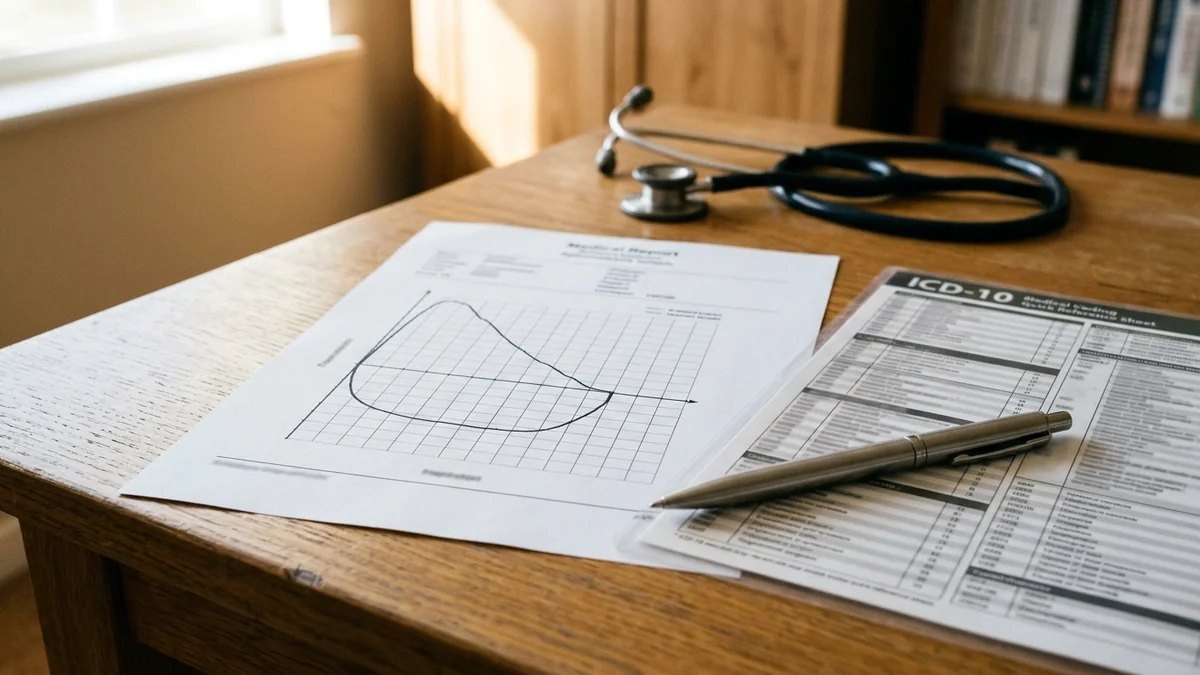
CPT 94010 is basic spirometry. When several spirometric determinations are needed to complete a service, only one unit is reported. CPT 94060 is a diagnostic test that measures spirometry before and after a bronchodilator to assess symptoms that may reflect reversible airway obstruction. Because 94060 already contains spirometry as in 94010, billing both for the same session is a duplicate; coding references list 94010 as bundled into 94060. NCCI also states that 94060 includes administering the bronchodilator, so you cannot add 94640 for that administration. The bronchodilator drug itself may be reported separately, using the drug code your payer requires. Which of the two a payer covers for follow-up testing is set by its own policy. Diagnosis codes and local coverage articles are covered below.
- 94010: spirometry, one unit regardless of how many blows are needed
- 94060: spirometry before and after a bronchodilator, includes administering the bronchodilator
- 94070: bronchospasm provocation with an administered agent, also one unit per NCCI
- Bronchodilator drug: reported separately, not through 94640
Lung Volume and DLCO Coding
How is Lung Volume and DLCO coding done?
Lung volume testing has two methods. CPT 94726 reports plethysmography, which measures lung volumes such as total lung capacity, residual volume and functional residual capacity, and may include airway resistance. CPT 94727 reports lung volumes by gas dilution or washout, comparing an inhaled gas concentration with the exhaled gas. Report the method that was actually performed and documented. CPT 94729 measures diffusing capacity, the lungs' ability to move oxygen into the blood, and it is an add-on, which means it is reported with a primary pulmonary function test and never alone. A full PFT panel therefore often looks like 94060 or 94010, plus 94726 or 94727, plus 94729, but the exact allowed combination depends on the NCCI procedure-to-procedure edit table and the payer. Use the table version for the date of service, and confirm each payer's pairing rules before billing a complete panel.
- 94726: lung volumes by plethysmography, may include airway resistance
- 94727: lung volumes by gas dilution or washout
- 94729: diffusing capacity, add-on to a primary pulmonary function test
- Full panel: spirometry code, one lung volume method, 94729, checked against the current edit table
Six-Minute Walk Test Coding
How is Six-Minute Walk Test coding done?
CPT 94618 reports pulmonary stress testing, which can include a six minute walk or another form of exercise. NCCI separates it from cardiopulmonary exercise testing (94621), a comprehensive exercise test that already includes its component tests. When 94621 is performed, you cannot also report components such as venous access, ECG monitoring, spirometric parameters before, during and after exercise, oximetry, oxygen consumption, carbon dioxide production or rebreathing cardiac output calculations. You also cannot report a cardiac stress test or a pulmonary stress test (94618) at the same encounter. Document the test and the clinician's interpretation, and if a walk is stopped early, record the reason and check the payer's position before billing.
Nebulizer Treatment vs Device Demonstration
What is the difference between Nebulizer Treatment and Device Demonstration?
CPT 94640 reports an inhaled treatment for acute airway obstruction, or an inhalation treatment to induce sputum for diagnostic purposes. NCCI allows it once per episode of care regardless of the number of treatments; a second separate episode on the same date can carry modifier 76. If inhalation drugs run as continuous treatment beyond an hour, 94644 and 94645 may be reported instead. When 94640 is used to treat acute airway obstruction, spirometry before or after the treatment is not reported separately, and reporting 94060 with 94640 is a misuse of 94060. CPT 94664 reports demonstrating or evaluating a patient's use of an aerosol generator. NCCI says 94640 and 94664 generally should not be reported for the same encounter, because the demonstration is included in 94640 when the same device is used. They can be reported separately if performed at separate patient encounters on the same date. The inhaled medication may be reported separately.
What Bundles Into a PFT
Several codes in this family are rarely paid when billed next to something else. CPT 94375, the respiratory flow-volume loop, is an alternative way of calculating a standard spirometric parameter, so NCCI says it is included in standard spirometry at rest and with exercise, and in ventilation management and critical care codes. CPT 94760 and 94761, noninvasive ear or pulse oximetry for a single and for multiple determinations, carry a PFS status of T. Florida Blue's payment policy 10-022, revised 5/14/2026, treats T-status codes as bundled into any other paid service by the same provider on the same date and states that no modifier overrides this and appeals will not be accepted. CPT 94660 reports starting continuous positive airway pressure (CPAP) ventilation and training the patient to use it. NCCI lists 94660 among the ventilation management codes that are not separately reportable with E/M services: if an E/M and a ventilation management code are both reported, only the E/M is payable. Another ventilation code in that group, 94662, was deleted on January 1, 2026. If 94660 is the only service in a visit, check payer policy for how it is paid.
- 94375: flow-volume loop, included in standard spirometry and in critical care or ventilation management
- 94760 and 94761: oximetry, status T, bundled under Florida Blue policy 10-022
- 94660: CPAP initiation and management, not separately payable with an E/M under NCCI
- 94662: deleted effective January 1, 2026, so do not use it for 2026 dates of service
Using Modifier 26 and TC on PFTs Correctly
How do I use Modifier 26 and TC on PFTs correctly?
Many diagnostic tests can be billed as a global service, which is the claim line with no modifier, or split into a professional component (modifier 26, the physician interpretation) and a technical component (modifier TC, the equipment, supplies and staff). The Medicare PFS PC/TC indicator controls whether a code can be split. Indicator 1 means the code can be reported globally or with 26 or TC. Indicators such as 0, 2, 3 and 4 do not allow 26 or TC on that line. Check the indicator for each of the codes in your lab, because one panel may mix global and split codes. A practice that owns the equipment and interprets its own tests bills global. A physician who only interprets, for example a hospital-based study read by an outside pulmonologist, bills modifier 26 and the facility or lab bills modifier TC. Do not bill 26 and global on the same test. Interpretation reports must be signed and tied to the study.
What Supports PFT Medical Necessity
Medicare contractors publish local coverage determinations and billing and coding articles for pulmonary function testing, and the diagnosis codes they accept vary by contractor, so look up the article for your state in the CMS Medicare Coverage Database. Commercial payers set their own medical policies. Florida practices should check the policy of Florida Blue and each other payer. Common supporting diagnoses for spirometry include J44.9 (chronic obstructive pulmonary disease, unspecified), J45.909 (unspecified asthma, uncomplicated), R06.2 (wheezing) and R06.02 (shortness of breath). A diagnosis code alone does not prove necessity, so the note should connect the test to the symptom or condition, and an order should be on file. If a physician in attendance for the testing takes a limited history and examination related to the test, NCCI says a separate E/M is not appropriate. An E/M may be reported with modifier 25 only for a significant, separately identifiable service unrelated to the testing. For the diagnosis side, see our respiratory ICD-10 codes and the medical necessity denials guide.
Common PFT and Spirometry Denials
What are the most common PFT and Spirometry denials?
These are typical reasons PFT claims are reduced or denied, and the checks that prevent them:
- 94010 billed with 94060 for the same session, which duplicates spirometry
- 94640 billed to cover bronchodilator administration already included in 94060
- 94640 with 94060 in the same encounter, or 94640 with 94664 for the same device
- 94375, 94760 or 94761 billed alone or with spirometry and denied as included
- 94621 billed with 94618 or its component tests at the same encounter
- Lung volumes billed by the wrong method, or 94729 billed without a primary PFT
- Missing 26 or TC on a split service, or both global and split lines on one study
- Diagnosis does not support the test under the payer's policy, which leads to a medical necessity denial that denial management must appeal with documentation
- Ventilation management or CPAP code billed on the same line as an E/M visit
More Pulmonology Billing Services Guides
Bronchoscopy Coding: CPT 31622 to 31654, Fluoroscopy, EBUS and Sedation
Bronchoscopy with fluoroscopy CPT code rules: fluoroscopy is not billed separately, plus 31622 bundling, EBUS 31652 to 31654, sedation and payment.
Sleep Study Billing: CPT 95810, 95811, Home Sleep Tests and Florida Medicare Rules
Sleep study billing guide: CPT 95810 vs 95811 split-night, home sleep tests G0398 to G0400, Medicare NCD 240.4 and First Coast LCD L33405 in Florida.
Related Services
PFT and Spirometry Coding, Frequently Asked Questions
Basic spirometry is CPT 94010. When the test is done before and after a bronchodilator to check reversibility, report 94060 instead. Do not report both for the same session. Multiple blows within one session are still one unit.
CPT 94726 reports lung volume measurement by plethysmography, which measures total lung capacity, residual volume and functional residual capacity, and may include airway resistance. The gas dilution or washout method is a different code, 94727.
CPT 94729 reports diffusing capacity, the measure of how well the lungs transfer gas into the blood. It is an add-on code, so it is reported with a primary pulmonary function test and not by itself. Check the primary code and the payer's edits before billing.
There is no single code for a complete PFT. A typical set reports a spirometry code (94010 or 94060), a lung volume method (94726 or 94727) and the 94729 add-on, subject to NCCI edits and payer policy. Each code needs its own documentation.
CPT 94660 reports starting continuous positive airway pressure (CPAP) ventilation and managing it, which includes training the patient to use the device. Under NCCI it is not separately reportable with an E/M service. If both are billed, only the E/M is payable.
Generally not. NCCI says the flow-volume loop (94375) is included in standard spirometry. Oximetry (94760 and 94761) has PFS status T, and Florida Blue's policy bundles T-status codes into any other paid service by the same provider on the same date, with no modifier override.
Examples include J44.9 for COPD, J45.909 for asthma and R06.2 or R06.02 for wheezing or shortness of breath. Accepted diagnoses vary by payer and Medicare contractor, so check the local coverage article or policy before billing.
Ask About PFT and Spirometry Coding
Ready to Improve Your PFT and Spirometry Coding?
Talk to a Medsure RCS specialist. No commitment, no pressure, just answers.
Sign up for our newsletter to receive updates, industry news, and articles about medical billing and revenue cycle management.