
HCPCS Coding Services
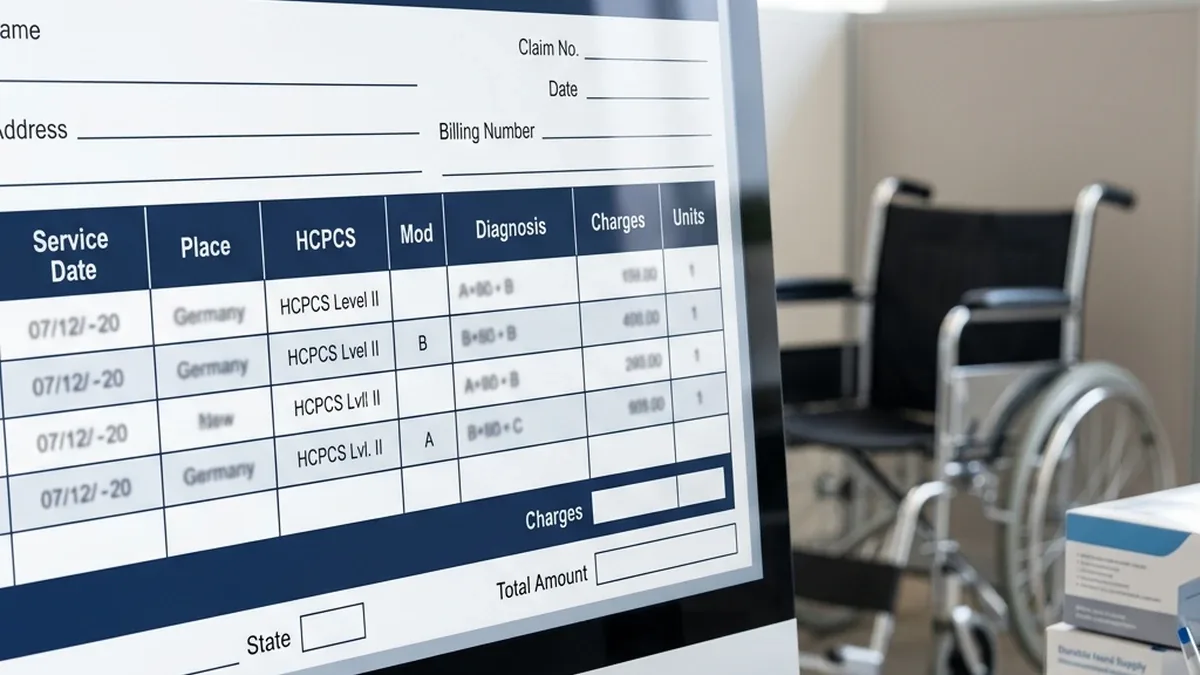
HCPCS Level II coding for durable medical equipment, supplies, drugs, and non-physician services.
Where HCPCS Level II Coding Applies
HCPCS Level II covers what CPT does not: supplies, drugs, equipment and certain services. These items carry their own documentation requirements and modifier conventions, and are reviewed closely because they fall outside routine procedure coding.
- Supplies, drugs and equipment coded to the correct HCPCS item
- Units and administration details documented to support the claim
- Modifiers applied per the conventions each category requires
- Coverage policy checked before items are billed
HCPCS Coding Services Explained
HCPCS (Healthcare Common Procedure Coding System) Level II codes are alphanumeric codes used to describe services, supplies, and equipment not captured by CPT codes. They are particularly important for Medicare and Medicaid claims covering durable medical equipment (DME), prosthetics, orthotics, supplies, drugs administered by a provider, and ambulance services. Correct HCPCS Level II coding is required for Medicare reimbursement and most Medicaid programs. CMS updates HCPCS codes quarterly.
Medsure RCS applies HCPCS codes accurately for all applicable service categories, following CMS annual HCPCS code updates, pricing schedules, and coverage policies. Incorrect or missing HCPCS codes are a common source of Medicare and Medicaid denials that are easily prevented with properly trained coding staff. Providers submitting HCPCS claims should also ensure medical coding compliance protocols cover DME-specific billing rules. HCPCS codes are especially critical for Medicare billing and apply throughout medical billing workflows wherever DME and drug administration are billed.
How It Works: Step by Step
Service and Supply Identification
We review clinical documentation and supply records to identify all services and items that require HCPCS Level II coding.
Code Selection and Modifier Application
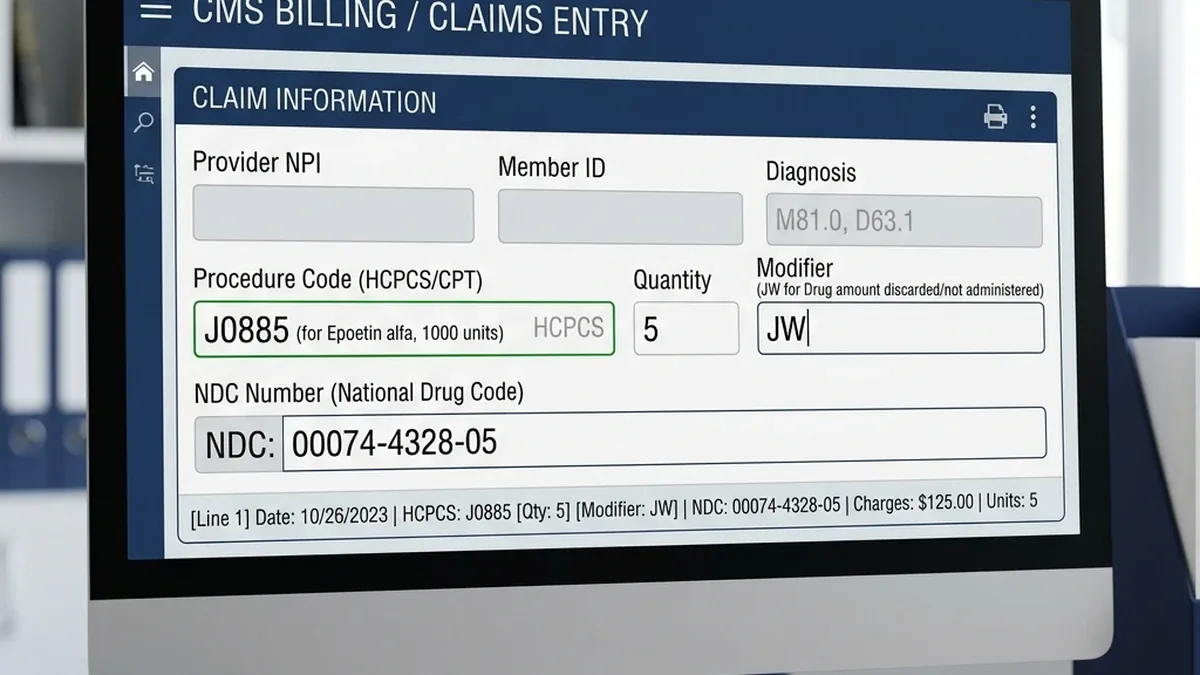
The correct HCPCS code is selected based on the specific item description, supply type, or drug, with applicable modifiers for coverage qualification.
Coverage Policy Verification
HCPCS codes are verified against applicable Medicare LCDs, DME contractor policies, and Medicaid coverage rules before submission.
Claim Integration
HCPCS codes are integrated into the claim alongside CPT codes and ICD-10-CM diagnosis codes with correct placement per claim form requirements.
The Impact of Accurate Coding
HCPCS Level II codes are updated quarterly by CMS and we implement all updates to prevent rejected claims.
All DME HCPCS codes are checked against applicable DMEPOS coverage policies before submission.
Provider-administered drug and biologic codes are captured separately, not missed as part of the office visit.
HCPCS coding is validated for both Medicare and Florida Medicaid requirements separately.
Common Mistakes in HCPCS Coding Services
Missing HCPCS Codes for Provider-Administered Drugs
When a provider administers a drug or biologic, the drug itself requires a separate HCPCS J-code in addition to the injection or infusion administration CPT code. Missing the J-code means billing only for the administration and not for the drug, which may represent significant revenue.
Using Outdated DME HCPCS Codes
CMS updates the HCPCS Level II code set quarterly, with significant annual revisions. DME suppliers and providers who do not implement updates promptly submit claims with deleted or invalid codes that are rejected at the clearinghouse.
Not Checking DME LCD Coverage Requirements
Medicare DME items are covered only when specific diagnosis codes (ICD-10-CM) are present on the claim that meet the LCD requirements for that item. Submitting a valid HCPCS code without the correct supporting diagnosis codes results in medical necessity denial.
Incorrect HCPCS Modifiers for Competitive Bid or Special Coverage Programs
Medicare and Medicaid HCPCS codes often require specific modifiers to indicate coverage qualifiers, geographic regions, or competitive bidding program eligibility. Missing required modifiers result in claim denials that are not always self-explanatory.
How Medsure RCS Manages HCPCS Coding Services
DME and Supply HCPCS Coding
We accurately code all DME, orthotics, prosthetics, and medical supplies with correct HCPCS Level II codes and applicable modifiers for Medicare and Medicaid claims.
Drug Administration Code Capture
Provider-administered drug J-codes are captured from pharmacy and administration records and included on claims with correct units and supporting ICD-10-CM codes.
LCD Coverage Policy Verification
All HCPCS codes are checked against applicable LCDs and NCD coverage policies before submission to confirm that diagnosis code requirements are satisfied.
Quarterly HCPCS Update Implementation
CMS quarterly HCPCS updates are implemented within the applicable effective dates across all client accounts to prevent code validity rejections.
Related Services
HCPCS Coding Services, Frequently Asked Questions
HCPCS Level I codes are CPT codes. HCPCS Level II codes are the alphanumeric codes (A through V categories) that describe supplies, equipment, drugs, and services not covered by CPT. When someone refers to "HCPCS coding" they typically mean Level II codes.
DME suppliers, home health agencies, infusion therapy providers, ambulance companies, and outpatient facilities use HCPCS Level II codes most frequently. However, physician practices also use J-codes for administered drugs and vaccines and certain supply codes.
Medicare and many Medicaid programs cover DME and supplies only when the patient has a qualifying diagnosis. The HCPCS code identifies what was provided; the ICD-10-CM code confirms that the patient's condition meets the coverage criteria for that item.
Yes. Many HCPCS Level II codes are reported on CMS-1500 professional claims. J-codes for injected drugs, G-codes for certain preventive services, and Q-codes for specific services appear on professional claims alongside CPT codes.
Ask About HCPCS Coding Services
Ready to Improve Your HCPCS Coding Services?
Talk to a Medsure RCS specialist. No commitment, no pressure, just answers.
Sign up for our newsletter to receive updates, industry news, and articles about medical billing and revenue cycle management.