

Medical Coding Compliance
Medical coding compliance services aligned with HIPAA, OIG workplan priorities, and payer-specific guidelines.
What Coding Compliance Actually Means
Compliance is whether the codes submitted are supported by the medical record and assigned according to official guidelines and payer policy. It is demonstrated through documentation and periodic review, not through a policy statement.
- Codes supported by what the clinical record documents
- Official coding guidelines applied alongside payer-specific policy
- Periodic internal review so exposure is found before a payer finds it
- Coder education tied to the errors the audit actually found
Medical Coding Compliance Explained
Medical coding compliance means that every code assigned on every claim is supported by clinical documentation, aligned with official coding guidelines, and consistent with CMS coverage policies and payer-specific rules. It covers both the technical accuracy of code assignment and the regulatory framework that governs what can be billed, at what level, and under what circumstances. Compliance applies across all code sets including CPT, ICD-10-CM, and HCPCS.
Medsure RCS builds compliance into the medical coding workflow rather than treating it as a separate review layer. Our coding practices align with OIG Work Plan priorities, HIPAA transaction standards, and payer-specific policies, with regular monitoring to detect and correct any patterns that could create audit exposure or recoupment risk. Coding compliance works hand in hand with billing compliance to protect the practice across the full revenue cycle. Compliance is maintained through regular medical coding audits, and the regulatory framework is covered in our HIPAA medical billing compliance guide.
How It Works: Step by Step
Compliance Baseline Coding Review
We review existing coding practices against OIG guidance, CMS policies, and payer-specific billing rules to identify any patterns that create compliance risk.
Compliant Coding Workflow Design
Coding workflows are structured with built-in compliance checkpoints covering documentation requirements, code sequencing, and medical necessity validation.
Ongoing Monitoring
Coding patterns are monitored against specialty benchmarks and OIG target areas with alerts for statistical outliers that indicate potential compliance issues.
Training and Corrective Action
Identified compliance issues are addressed through targeted coder training, documentation coaching for providers, and workflow adjustments.
The Impact of Accurate Coding
Our coding practices are tracked against current OIG Work Plan coding priorities to minimize audit exposure.
Pre-bill review ensures no claim is submitted with codes that lack supporting documentation.
Coding compliance protocols are reviewed and updated annually against current regulatory guidance.
All coding decisions are documented with guideline references for audit defensibility.
Common Mistakes in Medical Coding Compliance
Upcoding to Increase Reimbursement
Assigning a higher-level code than the documentation supports to increase payment is one of the most scrutinized forms of improper billing. It creates exposure to False Claims Act liability, OIG investigation, and Medicare exclusion regardless of intent.
Routine Downcoding to Avoid Audits
Systematically coding below what the documentation supports to avoid scrutiny is also improper billing. Routine downcoding results in significant revenue loss and misrepresents the services provided. Accurate coding, not conservative coding, is the compliant approach.
Billing for Unlisted Codes Without Supporting Documentation
Unlisted procedure codes (CPT -99) require a detailed special report describing the service when submitted. Submitting unlisted codes without supporting documentation, or using them to conceal services that have specific codes, creates compliance exposure.
Ignoring OIG Work Plan Focus Areas for Your Specialty
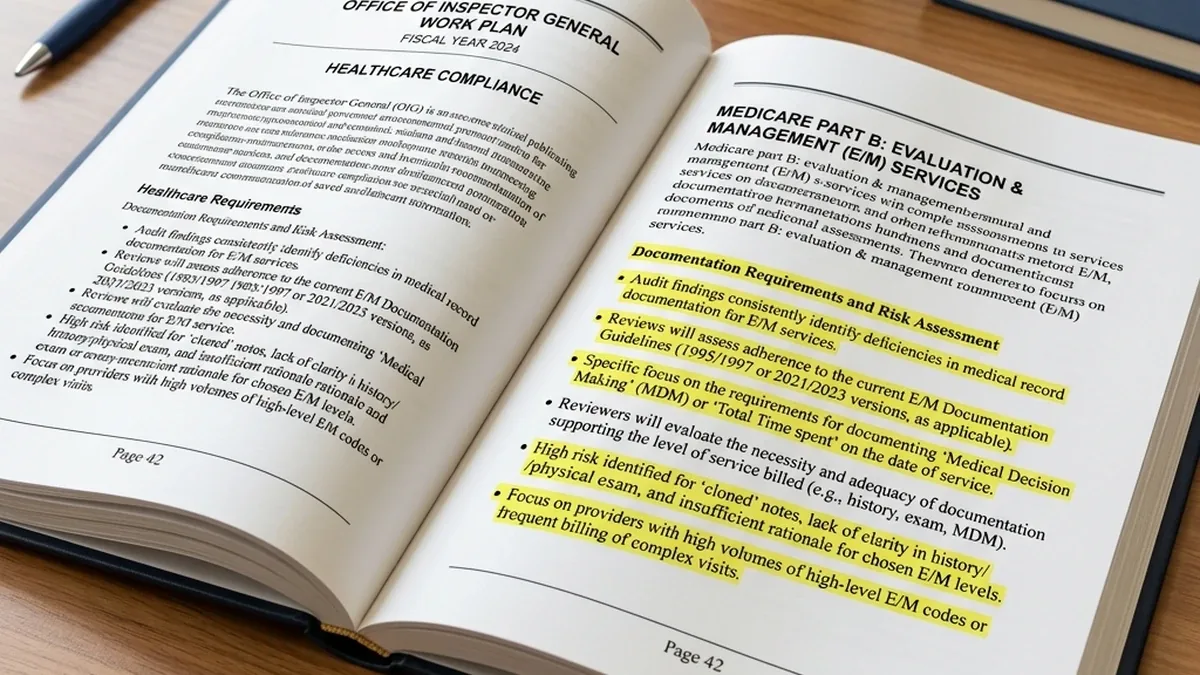
The OIG publishes an annual Work Plan identifying specific billing patterns and provider types under heightened scrutiny. Practices that ignore these focus areas and do not review their coding in those specific areas are taking unnecessary audit risk.
How Medsure RCS Manages Medical Coding Compliance
OIG Work Plan Monitoring
We track OIG Work Plan updates relevant to our clients' specialties and review coding practices in focus areas proactively, before external scrutiny.
Documentation Requirement Enforcement
Coding workflows require documentation review before every code assignment; no code is submitted without a corresponding documentation reference.
Compliance Pattern Reporting
Monthly compliance reports track coding patterns against specialty benchmarks and OIG target areas, flagging any statistical outliers for review.
Provider Documentation Feedback
When provider documentation consistently fails to support the services billed, we provide specific feedback on what the documentation must contain for compliant code assignment.
Medical Coding Compliance, Frequently Asked Questions
The OIG (Office of Inspector General) publishes an annual Work Plan identifying specific billing practices and provider types that will receive heightened audit scrutiny in the coming year. Coding practices in these focus areas should be proactively reviewed before an audit inquiry arrives.
Yes. Systematic under-coding, particularly when done to avoid scrutiny, misrepresents the services provided and results in improper payment. It also establishes a false baseline for what the practice normally bills, which can create compliance problems if coding is later corrected to accurate levels.
Coding errors are unintentional mistakes in code assignment that occur despite good-faith compliance efforts. Coding fraud requires intent to obtain improper payment. Persistent patterns of the same error, particularly errors that consistently result in overpayment, can be treated as fraud even without proven intent.
Known overpayments must be reported and refunded within 60 days of identification under the ACA. Medsure RCS assists with overpayment identification documentation and supports the voluntary disclosure and repayment process to minimize further regulatory exposure.
Ask About Medical Coding Compliance
Ready to Improve Your Medical Coding Compliance?
Talk to a Medsure RCS specialist. No commitment, no pressure, just answers.
Sign up for our newsletter to receive updates, industry news, and articles about medical billing and revenue cycle management.