
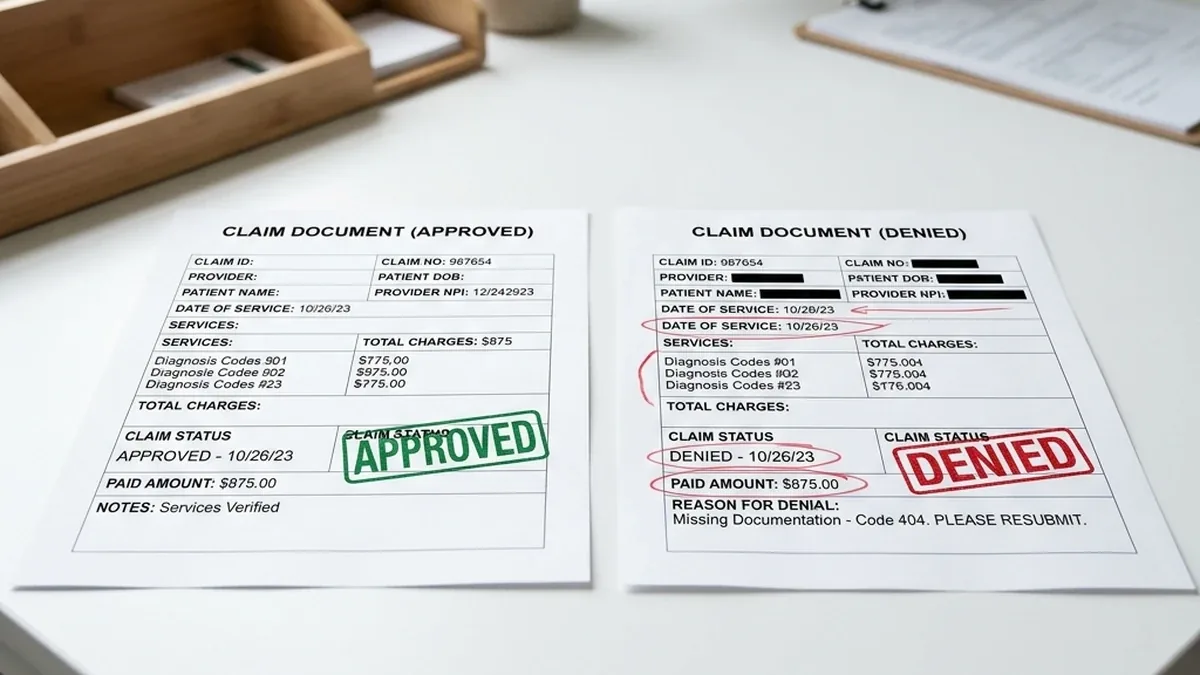
Claim denials are the most direct measure of billing cycle failure. Every denial represents a service that was delivered, documented, and coded correctly but still did not generate payment on the first submission. The cost is not just the delayed or lost revenue, it is also the staff time required to investigate, correct, and resubmit or appeal. Our denial management services can take this burden off your team.
Most denials are preventable. Industry data consistently shows that 60 to 90 percent of claim denials result from front-end issues that could have been caught before the claim was submitted. A systematic denial prevention program addresses those front-end gaps rather than investing heavily in back-end appeals work.
The Most Common Causes of Claim Denials
- Missing or inactive insurance coverage at the time of service, preventable with real-time eligibility verification.
- Services rendered without required prior authorization.
- Patient demographic or eligibility information errors on the claim.
- Incorrect procedure or diagnosis code combinations that fail medical necessity criteria, see our medical coding audit services.
- Timely filing deadlines missed due to slow claim submission.
- Duplicate claim submissions from resubmission errors.
- Provider credentialing or network status issues, see provider credentialing services.
- Missing referral or coordination of benefits information.
Front-End Prevention: Eligibility and Authorization
Eligibility verification should be completed for every patient before the appointment, not at check-in. Real-time checks confirm active coverage, benefit limits, copay amounts, deductible status, and whether a referral or prior authorization is required. Authorization management should include tracking pending authorizations, confirming approval before services are delivered, and documenting authorization numbers on the claim. These two steps alone eliminate the majority of preventable denials.
Claim Scrubbing and Edit Checks
A claim scrubber runs automated checks against the claim before it is transmitted to the payer. Well-configured scrubbers catch code combination errors, missing required fields, incorrect place of service codes, and modifier issues. Our clearinghouse solutions include scrubbing that catches errors before they reach the payer. Claims that pass scrubbing have a significantly higher first-pass acceptance rate.
Tracking Denials to Find Root Causes
Denial prevention requires understanding which denial reasons are recurring. A denial log that categorizes every denial by reason code, payer, provider, and service type allows you to identify patterns. If the same denial reason accounts for more than 10 percent of your volume, there is a systemic issue in the workflow that needs to be fixed upstream. Our RCM reporting and analytics provides the denial tracking infrastructure to identify patterns before they compound.
Key Takeaways
- Most denials are preventable and originate at the front end of the revenue cycle.
- Eligibility verification and prior authorization management are the most effective prevention steps.
- Claim scrubbing before transmission catches code errors before they reach the payer.
- Denial pattern analysis is required to find systemic causes, not just individual claim errors.
- A denial rate under 5 percent is achievable with consistent front-end process discipline.
Frequently Asked Questions
What is the timely filing limit for Medicare?
Medicare requires claims to be submitted within one year (12 months) from the date of service. Most commercial payers have shorter timely filing windows, often 90 or 180 days. Missed timely filing deadlines result in non-recoverable denials.
What is the difference between a denial and a rejection?
A rejection occurs before adjudication when the claim fails a formatting or data validation check at the clearinghouse or payer system. A denial occurs after the payer has processed the claim but determines it will not be paid as submitted. Rejections can usually be corrected quickly; denials may require an appeal.
How long do providers have to appeal a denial?
Medicare Part B gives 120 days from the date of the initial determination for a redetermination request. Commercial payer appeal windows typically range from 60 to 180 days. Missing the appeal deadline forfeits the right to challenge the denial. Our denial management team tracks appeal deadlines across all payers.