
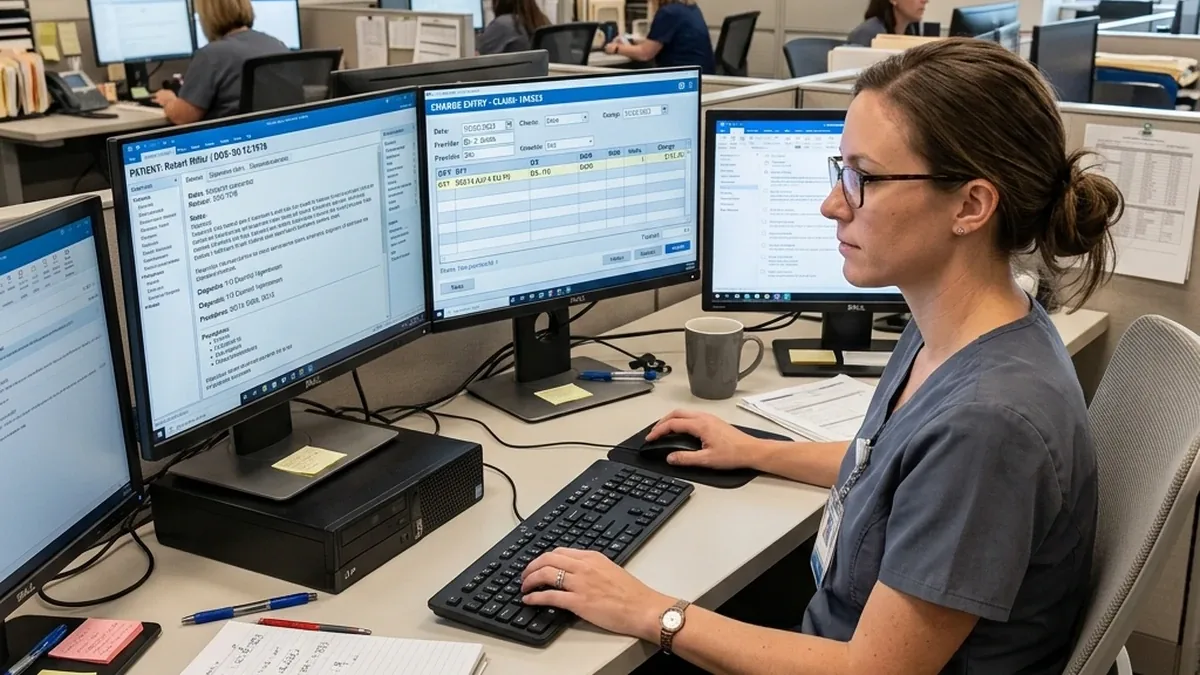
Charge Capture Services
Systematic charge capture services that ensure all billable services are documented, coded, and submitted without revenue leakage between clinical care.
Where Charge Capture Loses Revenue
Charges that are never captured are never denied, so nothing flags the loss. Services documented in the clinical note but not abstracted onto the claim are the quietest form of revenue leakage in a practice, and they compound every day they go unnoticed.
- Clinical documentation reconciled against submitted charges
- Procedures performed during a visit captured, not left in the narrative
- Day sheet matched to claims so encounters are not missed entirely
- Recurring capture gaps traced to the workflow step causing them
Charge Capture Services Explained
Charge capture is the process of identifying every billable service a provider renders and converting that clinical activity into a correctly coded charge entry ready for claims submission. Revenue leakage occurs when services are performed but never entered as charges, when charges are entered with incorrect codes, or when services are missed entirely due to disconnected clinical and administrative workflows. Correct code assignment at this stage, using CPT codes and ICD-10-CM, directly determines what the electronic claim communicates to the payer.
Medsure RCS manages charge capture through structured documentation review and daily reconciliation workflows that ensure all billable services reach the billing system accurately, completely, and on time. Every charge entry is validated before it moves into payment posting so downstream AR reporting reflects what was actually billed. Charge capture accuracy is validated through a medical billing audit and is a foundational step in the broader revenue cycle management workflow.
How It Works: Step by Step
Documentation Review
Clinical documentation from each encounter is reviewed to identify all services rendered, procedures performed, and supplies used that qualify for billing.
Code Assignment
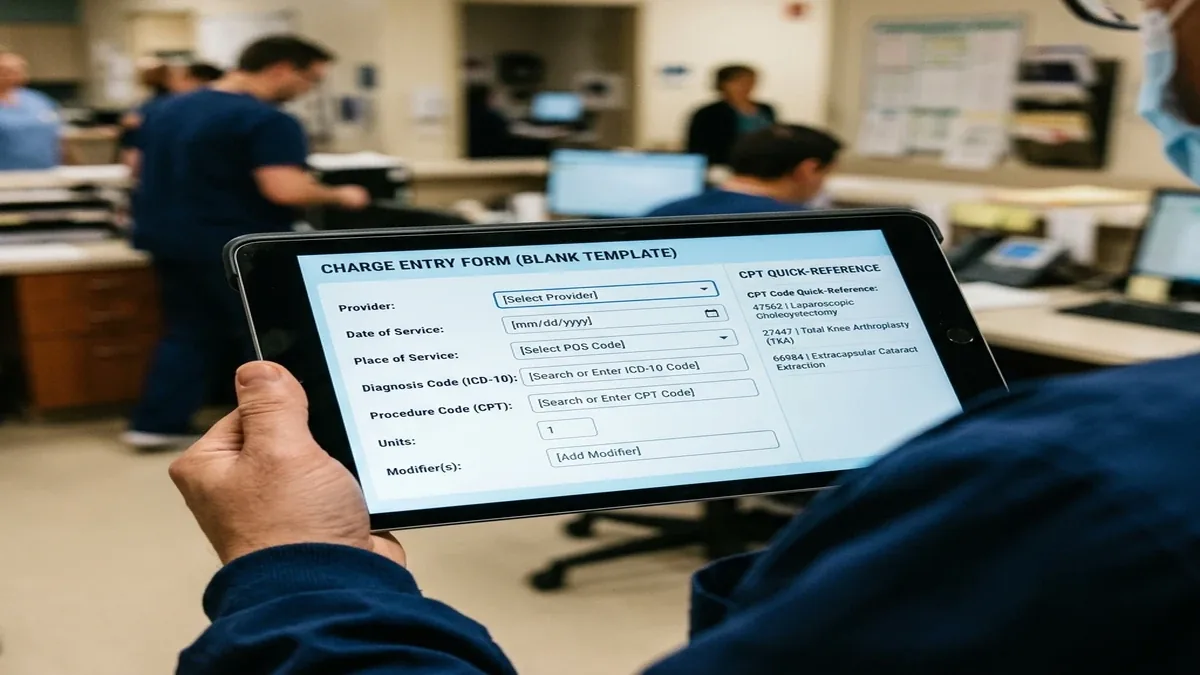
Each identified service is assigned the correct CPT and ICD-10-CM codes, with appropriate modifiers applied based on the clinical circumstances.
Charge Entry and Reconciliation
Charges are entered into the billing system and reconciled against the clinical schedule to confirm that every encounter has a corresponding charge.
Charge Review Before Submission
Entered charges are reviewed against documentation before claim submission to catch missing modifiers, incorrect units, or unsupported service levels.
Why This Matters for Your Revenue Cycle
Every scheduled and documented encounter is reconciled to confirm a charge was entered before claims run.
Charges are entered the same business day as the clinical encounter to keep claims submission on cycle.
Practices implementing structured charge capture recover 5 to 10 percent of previously untracked or under-captured revenue.
Daily reconciliation workflows catch missed charges before the billing cycle closes.
Common Mistakes in Charge Capture Services
Relying on Providers to Self-Report All Services
When billing depends entirely on providers self-reporting charges without documentation review, incidental services, supplies, and add-on procedures are routinely missed. Charge capture requires an independent reconciliation step.
Delayed Charge Entry
Charges entered days after the encounter increase the risk of missing the payer's timely filing window if combined with any other delay in the submission process. Same-day charge entry is the only safe standard.
Incorrect Units on Procedure Codes
Some CPT codes require reporting in specific units, such as time-based anesthesia or therapy codes. Incorrect unit values cause claim rejections or underpayments that are difficult to identify without charge-level auditing.
Not Capturing Ancillary Services
In-office labs, infusions, injections, and supplies rendered alongside a primary service are frequently missed because attention focuses on the primary procedure. All ancillary services must be documented and captured separately.
How Medsure RCS Manages Charge Capture Services
Daily Encounter Reconciliation
We reconcile the clinical schedule against entered charges every business day to identify any encounters missing a charge before the billing cycle runs.
Documentation-Driven Code Assignment
All charges are coded directly from clinical documentation rather than from provider shorthand or superbills alone, reducing coding errors and unsupported claim submissions.
Modifier Review
Charge entries are reviewed for correct modifier application, particularly for bilateral procedures, multiple procedures, and assistant surgeon situations that affect reimbursement calculation.
Revenue Leakage Identification
We track charge entry patterns over time to identify recurring missed services, under-coded procedure categories, or documentation workflows that consistently result in incomplete charges.
Charge Capture Services, Frequently Asked Questions
Revenue leakage refers to billable services that are performed but never reach the billing system as charges. It occurs through missed encounters, incomplete documentation, overlooked ancillary services, and delayed or incorrectly coded charge entries.
We compare the day's schedule or clinical log against charge entries in the billing system daily. Any encounter without a corresponding charge is flagged for review before the billing cycle runs.
Yes. We can capture charges from paper superbills, electronic documentation, or direct EHR integration depending on your practice workflow.
We document the situation and explore whether any exceptions apply. Timely filing disputes can sometimes be appealed with proof that the claim was submitted within the allowable window for that specific event. Prevention through daily reconciliation is the best approach.
Ask About Charge Capture Services
Ready to Improve Your Charge Capture Services?
Talk to a Medsure RCS specialist. No commitment, no pressure, just answers.
Sign up for our newsletter to receive updates, industry news, and articles about medical billing and revenue cycle management.