

RCM Reporting and Analytics
Structured RCM reporting and analytics that give practice leaders visibility into billing performance, payer trends, denial patterns.
What Revenue Cycle Reporting Should Show
A monthly collections total hides whether the practice is collecting slowly, writing off quietly, or losing claims at intake. Useful reporting separates those causes, breaking performance down by payer, provider and denial reason so there is something to act on.
- Collections, aged receivables and denial reasons reported separately
- Performance broken out by provider and by payer, not blended
- Denial trends surfaced early enough to correct the cause
- Benchmarks that show whether a number is good or merely stable
RCM Reporting and Analytics Explained
Revenue cycle reporting and analytics provide practice leaders with quantified, organized data about every stage of the billing process. The right reporting system turns raw billing activity into actionable intelligence: which payers are delaying payment, which codes are generating the most denials, what the average days in AR look like across providers, and where the biggest collection gaps are. Denial patterns identified in reports feed directly into our denial management services workflow.
Medsure RCS delivers structured RCM reporting with monthly dashboards and on-demand reporting that present billing data in formats practice managers and administrators can use without needing to interpret raw billing system exports. Tracking accounts receivable trends and payment posting accuracy are among the most valuable data points in any billing analytics program. Reporting findings complement medical billing audit results, and the key performance indicators are explained in detail in our medical billing KPIs guide.
How It Works: Step by Step
KPI Definition and Baseline
We establish the practice's key performance indicators and capture baseline values for AR days, clean claim rate, denial rate, and collection rate.
Data Collection and Consolidation
Billing activity data from the practice management system, clearinghouse, and payer portals is consolidated into a unified reporting dataset.
Monthly Dashboard Generation
Monthly reports are generated showing KPI performance, trends versus prior periods, payer-level detail, and denial pattern analysis.
Insights and Recommendation Review
Reporting is reviewed with practice leadership monthly to translate data trends into specific workflow adjustments and revenue improvement actions.
Monthly dashboards provide consistent visibility into billing health with trends versus prior periods.
Ad hoc reports on any billing metric are available on request throughout the month.
AR days, clean claim rate, denial rate, collection rate, and revenue per encounter tracked monthly.
All metrics are broken down by payer so problem payers are identified and addressed.
Common Mistakes in RCM Reporting and Analytics
Reporting on Activity Instead of Outcomes
Tracking how many claims were submitted tells you nothing useful. Reporting must focus on outcomes: how many were paid on first submission, what was the denial rate, how long did payment take, and what percentage of denied claims were recovered.
Not Comparing to Benchmarks
Internal metrics have limited meaning without comparison to industry benchmarks or prior-period performance. AR days of 45 are either improving or worsening depending on what they were last month and what the specialty benchmark is.
Generating Reports That No One Reviews
Billing reports that are generated but not reviewed in a regular leadership meeting produce no improvement. Data must be connected to decisions and workflow changes to have value.
Hiding Negative Trends in Aggregate Numbers
High-level summary reports can mask poor performance in specific payers, providers, or service lines. Reporting must include payer-level and provider-level breakdowns to identify where improvement is actually needed.
How Medsure RCS Manages RCM Reporting and Analytics
Monthly KPI Dashboards
We deliver standardized monthly dashboards covering AR days, clean claim rate, denial rate, first-pass resolution rate, and collection rate with payer-level breakdowns.
Payer Performance Scorecards
Each major payer is tracked against expected payment timelines, denial rates, and underpayment patterns so problem payers are identified and addressed specifically.
Denial Trend Analysis
Denial data is analyzed by CARC code, service type, and provider to identify patterns that indicate upstream workflow issues needing correction.
On-Demand Custom Reporting
Practice leaders can request custom reports on any billing metric at any time, including provider-specific performance, service line revenue, or payer comparison analyses.
RCM Reporting and Analytics, Frequently Asked Questions
Days in AR is the single most important operational metric because it reflects the combined effect of claim submission speed, clean claim rate, payer processing time, and follow-up effectiveness. Denial rate is the most actionable metric for identifying specific improvement opportunities.
AR aging should be reviewed daily at the operational level. Management-level KPI dashboards should be reviewed monthly, and deeper trend analyses should happen quarterly. Revenue cycle health cannot be managed from an annual review alone.
Yes. We can extract data from your EHR and practice management system and combine it with clearinghouse and payer data to produce comprehensive reports. We work with exported data from all major EHR platforms.
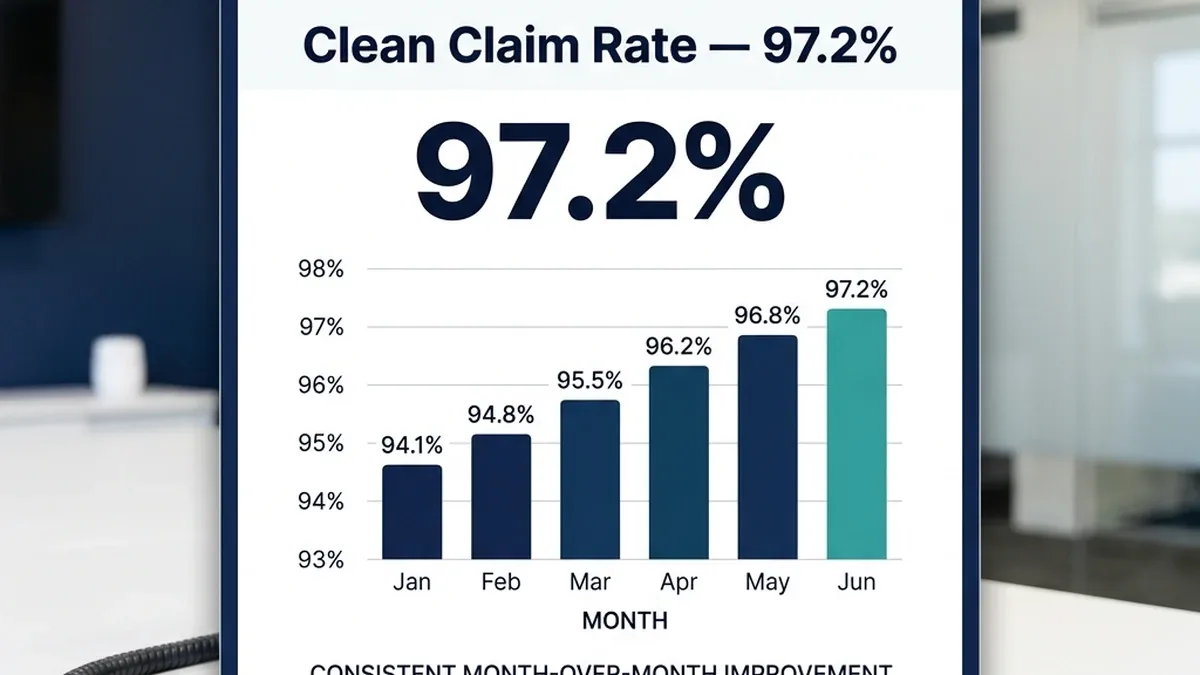
Clean claim rate measures what percentage of claims were accepted and paid on first submission without rejection or denial. Industry target is 95 percent or above. Rates below 90 percent indicate systemic issues in coding, eligibility verification, or claim preparation that require investigation.
Ask About RCM Reporting and Analytics
Ready to Improve Your RCM Reporting and Analytics?
Talk to a Medsure RCS specialist. No commitment, no pressure, just answers.
Sign up for our newsletter to receive updates, industry news, and articles about medical billing and revenue cycle management.