
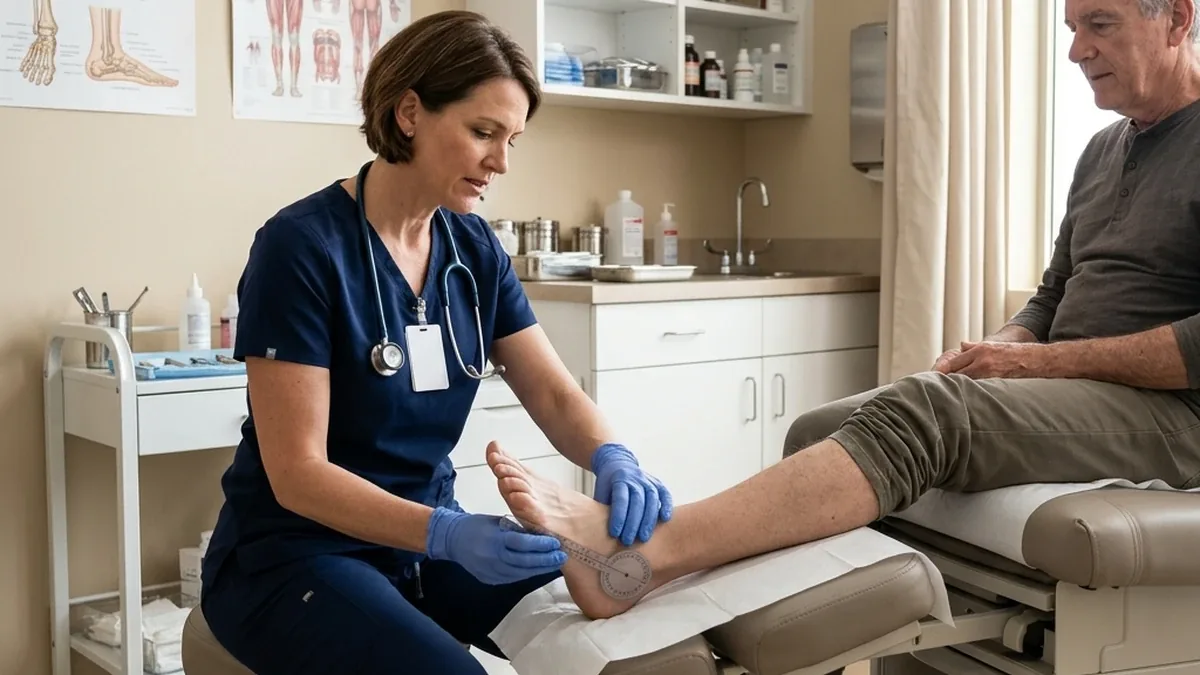
Podiatry Billing Services
Podiatry billing that manages routine foot care limitations, surgical procedure coding and Medicare podiatry billing guidelines.
The Routine Versus Covered Care Distinction
Podiatry coverage hinges on whether care is routine foot care, which is generally excluded, or medically necessary treatment of a covered condition. The documentation has to establish the qualifying condition, not simply describe the service.
- Qualifying systemic condition documented to support coverage
- Routine care distinguished from medically necessary treatment
- Therapeutic footwear billed under its separate requirements
- Liability modifiers applied where non-coverage is expected
Podiatry Billing Services Explained
Podiatry billing is shaped by CMS Medicare routine foot care limitations and the specific documentation requirements needed to qualify patients for covered nail care under the diabetes exception. Non-covered routine foot care, nail trimming, callus removal, and hygiene care, must be clearly separated from medically necessary podiatric services to prevent compliance issues. Therapeutic footwear and supplies dispensed to these patients fall under DME billing rules rather than the office visit.
Medsure RCS manages podiatry medical billing services for Florida practices with accurate routine vs medically necessary care distinction, correct ICD-10-CM coding for systemic conditions, and Medicare-compliant documentation for nail care claims under the diabetes and systemic condition exceptions. Podiatry is part of our specialty medical billing program, with specific expertise in Medicare billing limitations for routine foot care.
How It Works: Step by Step
Coverage Status Classification
Each service is classified as covered (medically necessary treatment, surgical care, biomechanical evaluation) or non-covered (routine foot care) based on documented diagnosis and clinical findings.
Exception Documentation Review
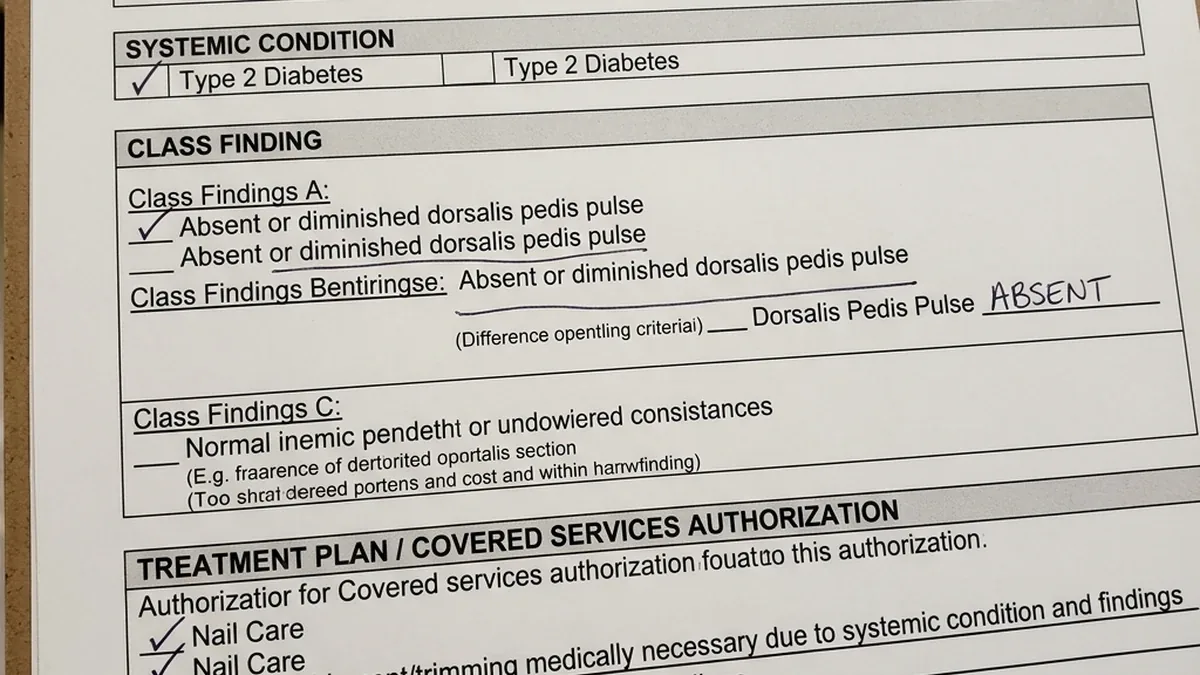
For nail care claims under the diabetes exception, documentation confirms the patient's systemic condition, the class finding (absent pulse, absence of protective sensation, etc.) and treating physician attestation.
Podiatric Procedure Coding
Surgical codes are selected for toenail procedures, hammertoe correction, bunionectomy, and other procedures with correct approach and anatomic site documentation.
Orthotics and DME Billing
Custom orthotic and diabetic footwear billing is handled with correct HCPCS codes, prescription documentation, and Medicare coverage criteria for diabetic shoe programs.
Why This Matters for Your Revenue Cycle
Every nail care claim submitted under the diabetes exception includes required class finding documentation.
Coverage classification accuracy and routine vs medical care separation drive first-pass acceptance above 95%.
Routine foot care is never billed to Medicare without documented covered exception status.
Podiatric surgical procedures are coded with correct approach, site, and complexity documentation.
Common Mistakes in Podiatry Billing Services
Billing Routine Nail Trimming to Medicare Without Exception
Medicare does not cover routine nail trimming, callus removal, or foot hygiene care unless the patient has a documented systemic condition (diabetes, peripheral vascular disease, etc.) with a qualifying class finding. Billing without the exception documentation is a compliance violation.
Wrong Bunionectomy Code by Procedure Type
Bunionectomy codes are selected based on whether the procedure was a simple exostectomy, a McBride procedure, a Keller arthroplasty, or a metatarsal osteotomy. Using the wrong code type based on incomplete operative report review results in systematic miscoding.
Missing Class Finding Documentation
The diabetes exception for nail care requires one of three class findings to be documented: absent posterior tibial pulse, absent dorsalis pedis pulse, or absence of protective sensation. If this finding is not recorded, the claim is not eligible for covered nail care.
Incorrect Diabetic Footwear HCPCS Code
Diabetic therapeutic shoes and inserts use specific HCPCS codes by shoe type and depth. Using the wrong HCPCS code for the footwear provided, or billing without a written order from the treating physician, results in denial.
How Medsure RCS Manages Podiatry Billing Services
Routine vs Covered Care Separation
Clear classification of covered podiatric services from non-covered routine foot care based on diagnosis and exception criteria.
Nail Care Exception Documentation
Medicare diabetes and systemic condition exception documentation review for every nail care claim submitted to Medicare.
Podiatric Surgery Billing
Bunionectomy, hammertoe correction, toenail avulsion, and podiatric surgery billing with correct approach and complexity codes.
Biomechanical Evaluation Billing
Biomechanical exam coding with correct gait analysis, casting, and functional orthotic prescription documentation.
Diabetic Footwear Program Billing
Diabetic shoe (A5500-A5513) and custom insert (A5512-A5513) billing with prescription and fitting documentation.
Wound Care Billing
Diabetic foot ulcer wound care coding with debridement codes by depth, surface area, and number of wounds.
Related Services
Podiatry Billing Services, Frequently Asked Questions
Routine nail trimming may be covered under Medicare when the patient has a systemic condition that creates a medical risk, specifically when one of three class findings is documented: absent posterior tibial pulse, absent dorsalis pedis pulse, or absence of protective sensation. A qualifying systemic condition plus a class finding makes the nail care billable as medically necessary.
New diabetic patients qualify for a comprehensive diabetic foot exam. The evaluation is billed with the appropriate E/M code supported by documentation of vascular and neurological examination findings, risk stratification, and care plan documentation. This is a covered preventive benefit under Medicare for diabetic patients.
Custom-fabricated orthotics require a prescription from the treating podiatrist, biomechanical examination documentation, casting or scanning records, and a fitting note. Off-the-shelf prefabricated orthotics use different HCPCS codes and do not require casting. The documentation must clearly distinguish custom-fabricated from prefabricated devices.
The first nail is billed with the primary code (11720 for 1-5 nails, or 11721 for 6 or more, for simple removal). Surgical nail avulsion (11730) covers the first nail with 11732 as the add-on for each additional nail. The code selected depends on whether the procedure was simple nail trimming or surgical avulsion with anesthesia.
Ask About Podiatry Billing Services
Ready to Improve Your Podiatry Billing Services?
Talk to a Medsure RCS specialist. No commitment, no pressure, just answers.
Sign up for our newsletter to receive updates, industry news, and articles about medical billing and revenue cycle management.