

Medical Billing Denial Codes: Complete CARC and RARC Reference
Complete reference for all medical billing denial codes. Find CARC and RARC definitions, causes, and resolution steps for every major claim denial code.
Medical Billing Denial Codes at a Glance
Medical billing denial codes are standardized reason codes issued by payers to explain why a claim was adjusted, reduced, or denied. Every code maps to a specific cause, from timely filing violations to bundling rules to missing documentation, and each one requires a different corrective action.
Browse the Denial Codes Reference
Medical billing denial codes are standardized reason codes issued by payers to explain why a claim was adjusted, reduced, or denied. Every code maps to a specific cause, from timely filing violations to bundling rules to missing documentation, and each one requires a different corrective action. Effective denial management starts with reading the CARC and RARC codes on the remittance advice and working the claim from the correct resolution path.
This reference covers all Claim Adjustment Reason Codes (CARC) and Remittance Advice Remark Codes (RARC) used across Medicare, Medicaid, and commercial payers. Each entry includes the official definition, the billing scenarios most likely to trigger it, and the steps required to correct, resubmit, or appeal the claim. Codes tied to medical necessity often depend on whether a waiver of liability was collected under modifier GA before the service was rendered.
Back to Denial Management Services in Florida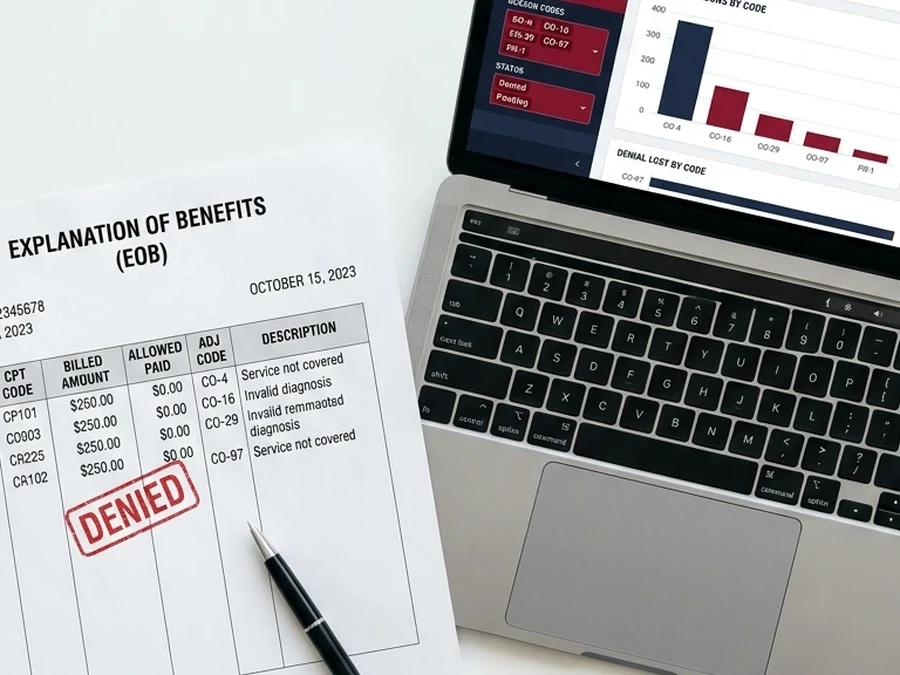
Complete Denial Codes Reference Index
Browse all entries with definitions and billing guidance.
CO-4 Denial Code: Procedure Incompatible with Modifier
CO-4 denial means the procedure code is inconsistent with the modifier used. Learn causes,…
View Details CO.5CO-5 Denial Code: Procedure and Place of Service Mismatch
CO-5 denial occurs when the procedure code does not match the place of service. Learn how …
View Details CO.11CO-11 Denial Code: Diagnosis Inconsistent with Procedure
CO-11 denial means the diagnosis code is inconsistent with the procedure billed. Learn wha…
View Details CO.15CO-15 Denial Code: Missing or Invalid Authorization
CO-15 means the authorization number is missing, invalid, or does not apply to the service…
View Details CO.59CO-59 Denial Code: Multiple or Concurrent Procedure Rules
CO-59 means the claim was processed under multiple or concurrent procedure rules. What tri…
View Details CO.253CO-253 Denial Code: Sequestration Payment Reduction
CO-253 is the sequestration reduction in federal payment. It is a mandatory adjustment, no…
View Details CO.16CO-16 Denial Code: Claim Lacks Required Information
CO-16 means the claim is missing required information or has a submission error. Learn whi…
View Details CO.22CO-22 Denial Code: Coordination of Benefits Adjustment
CO-22 denial indicates the claim may be covered by another payer per COB rules. Learn how …
View Details CO.27CO-27 Denial Code: Expenses After Coverage Terminated
CO-27 denial means the patient's coverage was not active on the date of service. Learn how…
View Details CO.29CO-29 Denial Code: Timely Filing Limit Exceeded
CO-29 denial means the claim was not filed within the payer's required timeframe. Learn ti…
View Details CO.45CO-45 Denial Code: Charges Exceed Fee Schedule
CO-45 is a contractual adjustment where charges exceed the payer fee schedule. Learn the d…
View Details CO.50CO-50 Denial Code: Medical Necessity Denial
CO-50 means the service was not deemed medically necessary by the payer. Learn how to docu…
View Details CO.97CO-97 Denial Code: Service Bundled into Another Procedure
CO-97 means the billed service is bundled into another procedure already adjudicated. Lear…
View Details CO.109CO-109 Denial Code: Not Covered by This Payer
CO-109 means the service or claim is not covered by this payer. Learn how to identify cove…
View Details CO.119CO-119 Denial Code: Benefit Maximum Reached
CO-119 means the patient has reached the maximum benefit for the period. Learn how to trac…
View Details CO.167CO-167 Denial Code: Diagnosis Not Covered
CO-167 means the diagnosis code submitted is not covered or valid for the billed service. …
View Details PR.1PR-1 Denial Code: Patient Deductible Responsibility
PR-1 indicates the billed amount is applied to the patient's deductible. Learn how to comm…
View Details PR.2PR-2 Denial Code: Patient Coinsurance Responsibility
PR-2 indicates the amount is the patient's coinsurance responsibility. Learn how to calcul…
View Details PR.3PR-3 Denial Code: Patient Copayment Responsibility
PR-3 indicates the copayment amount owed by the patient. Learn how to collect PR-3 copays …
View Details OA.23OA-23 Denial Code: Prior Payer Payment Adjustment
OA-23 indicates payment was adjusted due to a prior payer's payment. Learn how to apply OA…
View DetailsDenial Codes Reference, Frequently Asked Questions
Medical billing denial codes are standardized reason codes issued by payers to explain why a claim was adjusted, reduced, or denied. Every code maps to a specific cause, from timely filing violations to bundling rules to missing documentation, and each one requires a different corrective action. Effective denial management starts with reading the CARC and RARC codes on the remittance advice and working the claim from the correct resolution path.
This reference covers all Claim Adjustment Reason Codes (CARC) and Remittance Advice Remark Codes (RARC) used across Medicare, Medicaid, and commercial payers. Each entry includes the official definition, the billing scenarios most likely to trigger it, and the steps required to correct, resubmit, or appeal the claim. Codes tied to medical necessity often depend on whether a waiver of liability was collected under modifier GA before the service was rendered.
Need Help Managing Billing Denials?
Our medical billing specialists can help you identify patterns, fix root causes, and reduce your denial rate.
Sign up for our newsletter to receive updates, industry news, and articles about medical billing and revenue cycle management.