
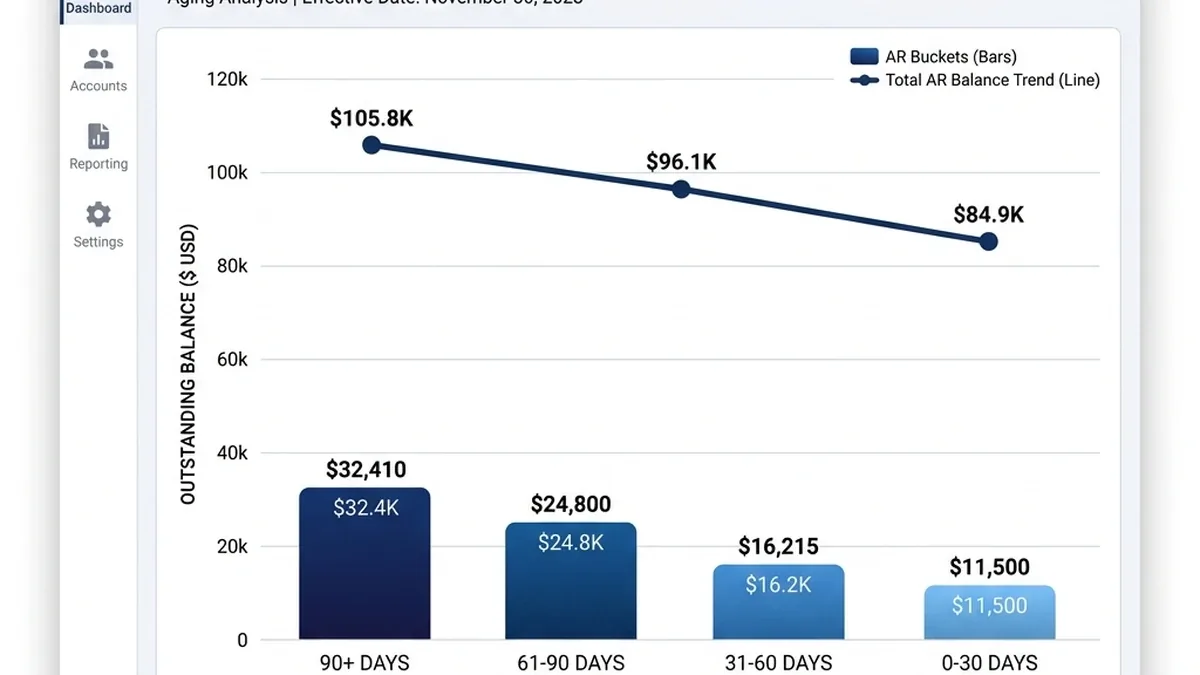
Days in accounts receivable (AR) is the single most visible indicator of billing cycle health. When it rises, it signals that claims are sitting unpaid longer than they should be. The causes range from slow follow-up workflows to unresolved denials stacking in the aging report to patient balance collection problems. Reducing days in AR is the result of improving multiple stages of the billing cycle simultaneously.
The strategies in this guide focus on the most impactful levers available to practice administrators and billing managers. Track your progress using our RCM reporting and analytics platform.
Prioritize the Aging Buckets That Matter Most
Balances in the 0-30 day bucket are typically within the payer processing window and do not require action yet. Balances that move into the 31-60 day bucket should trigger a status check. Balances in the 61-90 day bucket require active follow-up. Balances over 90 days are at risk of becoming uncollectable. Our accounts receivable management team works each aging bucket with defined timelines and escalation protocols.
Fix Denials at the Root Cause, Not Just the Claim Level
Reworking individual denied claims reduces their specific impact on AR, but it does not reduce the denial rate. If the same denial reason code appears more than 10 times in a month, it is a process problem, not a claim problem. Our denial management services identify top denial reason codes and trace each back to where in the workflow it originates. A high volume of eligibility denials points to a front-end verification gap. A high volume of authorization denials points to a PA management gap.
Tighten Payer Follow-Up Timelines
Most billing teams follow up on unpaid claims on a 30-day cycle by default. For payers with 14-day processing windows, waiting 30 days before following up means claims are already 16 days late before anyone acts. Build payer-specific follow-up timelines based on each payer contractual processing period. Our payer-specific billing services include known processing timelines for Medicare and major commercial payers.
Accelerate Patient Balance Collections
Many practices underperform on patient collections because the billing statement cycle is slow, the balance is unclear, or the payment options are limited. Send the first patient statement within 5 days of insurance adjudication. Send a second statement at 30 days. Flag accounts with balances over a defined threshold for phone outreach at 45 days. Our revenue cycle management program includes a structured patient collections workflow.
Key Takeaways
- Focus follow-up effort on the 61-90 and 90-plus day buckets.
- Denial root cause analysis is required to drive down AR; claim-level rework alone does not move the metric.
- Payer-specific follow-up timelines outperform generic 30-day cycles.
- Patient balance collection performance is now a significant contributor to overall days in AR.
- Track days in AR trends via RCM analytics, not just monthly snapshots.
Frequently Asked Questions
What is a good days in AR benchmark?
Most specialties target 30 to 40 days. Specialties with complex procedures, frequent prior authorization requirements, or heavy Medicare Advantage exposure may run closer to 45 to 50 days. Our AR management team benchmarks your performance against specialty-specific data.
Should patient AR and insurance AR be tracked separately?
Yes. Patient AR and insurance AR behave differently and require different resolution strategies. Our RCM reporting platform tracks each segment separately.
What is the difference between days in AR and collection rate?
Days in AR measures how quickly money is collected. Collection rate measures how much of what was collectible was actually collected. A practice can have a low days in AR and a low collection rate if it is writing off balances instead of collecting them.