

Medical Appointment Scheduling Services
Structured appointment scheduling support that reduces no-shows, improves patient intake flow, and aligns front-desk operations with billing workflows.
How Scheduling Affects Billing Outcomes
Scheduling is the first step of the revenue cycle, not an administrative task separate from it. Demographic and coverage data captured at booking determines whether the claim can be billed cleanly weeks later, which is why scheduling and eligibility belong in the same workflow.
- Demographic and insurance data captured to the standard the claim needs
- Coverage verification triggered at the point of booking
- Authorization lead time built into the appointment date
- Reduced no-show and cancellation loss through reminder workflows
Medical Appointment Scheduling Explained
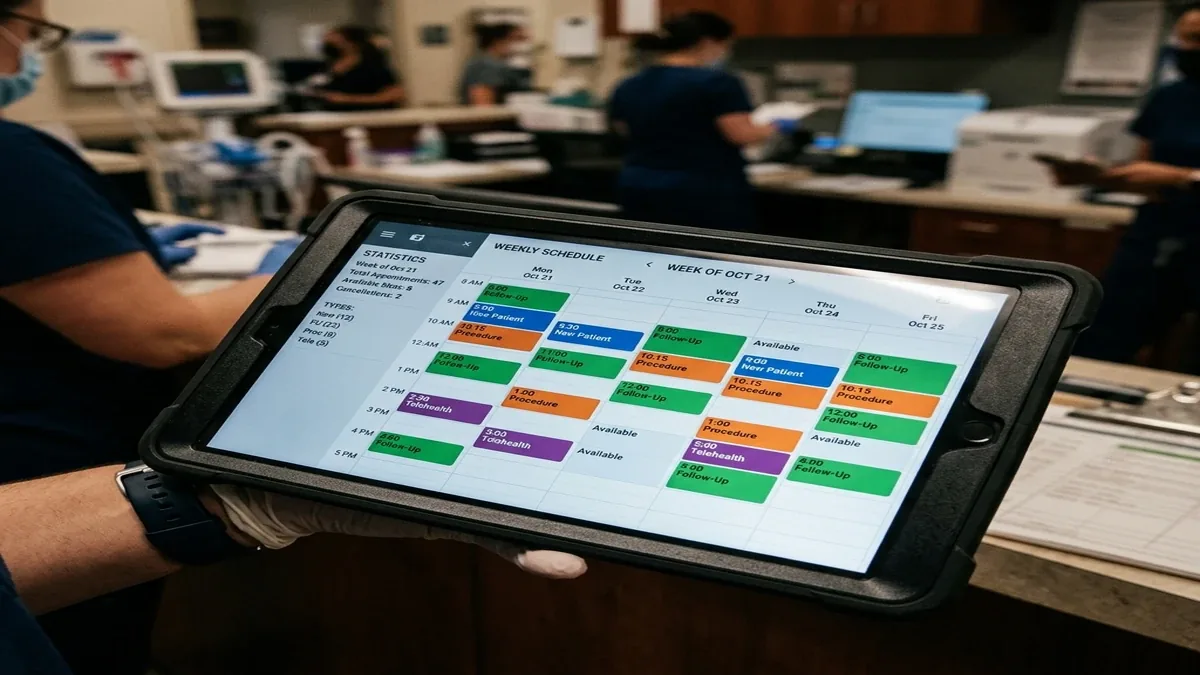
Medical appointment scheduling is the first step in the medical billing process. Each appointment triggers eligibility verification, authorization checks, and demographic confirmation that feed directly into claim accuracy. When scheduling and billing operate in silos, the billing team receives incomplete patient data, missing authorizations, and coverage surprises that cause preventable denials.
Medsure RCS provides scheduling support as part of an integrated front-desk workflow, ensuring every appointment captures the insurance, referral, and demographic information needed to submit a clean claim before the patient arrives. Services that require advance payer approval are flagged immediately for prior authorization so nothing falls through between scheduling and the date of service. Our front desk services coordinate scheduling with patient billing services to close the loop from intake through final collection.
How It Works: Step by Step
Billing-Aligned Intake
Patient requests are handled with complete insurance and demographic collection at the point of scheduling, not at check-in.
Pre-Verification at Scheduling
Insurance is verified at scheduling time to identify coverage issues and authorization requirements with time to resolve them.
Authorization Initiation
When the scheduled service requires prior authorization, the request is initiated immediately so approval is confirmed before the appointment.
Reminders and Confirmation
Appointment confirmations and reminders are sent in advance to reduce no-shows and allow time to reschedule without schedule gaps.
Why This Matters for Your Revenue Cycle
Structured confirmation and reminder protocols reduce no-shows, protecting appointment revenue.
Insurance and demographic data gathered at scheduling eliminates day-of-service scrambling.
Starting PA workflows at scheduling provides 48 or more hours to receive approval before the visit.
Structured intake scripts and validation ensure patient data is complete before each visit.
Common Mistakes in Medical Appointment Scheduling
Separating Scheduling from Billing
When scheduling staff and billing staff operate independently, critical information collected at scheduling never reaches the billing team. Authorization requirements, referral status, and coverage details must flow directly from scheduling into the billing workflow.
Not Collecting Insurance at Scheduling
Waiting until a patient arrives to collect insurance gives no time to resolve coverage issues or initiate authorizations. All insurance data should be collected and pre-verified at scheduling.
Confirming Appointments Without Checking Authorization
Confirming an appointment for a service requiring prior authorization without starting the PA process is one of the most common drivers of post-visit authorization denials.
Overbooking Without Documentation Controls
More patients than capacity allows leads to rushed intake, incomplete documentation, and downstream coding errors that compound denial rates throughout the billing cycle.
How Medsure RCS Manages Medical Appointment Scheduling
Billing-Integrated Intake Scripts
Scheduling workflows are designed to collect all data needed for clean billing, including insurance, referral, and demographic information, at the point of scheduling.
PA Initiation at Scheduling
When the scheduled service requires prior authorization, we initiate the request immediately to ensure approval is in place before the visit date.
EHR-Compatible Workflows
We work within your existing practice management system, adapting our scheduling processes to align with the tools your practice already uses.
No-Show Management
Structured confirmation and reminder workflows reduce no-shows and provide advance notice for rescheduling so clinical schedules stay full.
Related Services
Medical Appointment Scheduling, Frequently Asked Questions
Yes. Scheduling support is available as part of our integrated front-desk operations service. We treat scheduling as the first step in billing, not a separate administrative function.
Yes. We adapt to your existing EHR and practice management system. No software changes are required.
Most eligibility-based and authorization-related denials originate from missing data or late PA requests. When insurance is verified and PAs are initiated at scheduling, those denials drop significantly.
We verify whether the existing authorization transfers to the new date or whether a new one is required. Payer policies vary on this, and we handle the check as part of the rescheduling workflow.
Ask About Medical Appointment Scheduling
Ready to Improve Your Medical Appointment Scheduling?
Talk to a Medsure RCS specialist. No commitment, no pressure, just answers.
Sign up for our newsletter to receive updates, industry news, and articles about medical billing and revenue cycle management.