
Medical Billing Follow-Up Services
Structured claim follow-up services that pursue outstanding balances with insurance payers, reduce aging accounts receivable, and improve collection rates.
What Systematic Claim Follow-Up Looks Like
Unworked claims do not resolve themselves, they age past filing deadlines. Follow-up means a defined cadence on every unpaid claim by payer and age, with contact recorded and next action set, rather than periodic batch review when someone has time.
- Every unpaid claim assigned a follow-up cadence by payer and age
- Contact and payer response recorded so work is not repeated
- Claims approaching timely filing limits prioritised
- Patterns escalated to the payer rather than reworked one claim at a time
Medical Billing Follow-Up Explained
Billing follow-up is the structured process of pursuing unpaid insurance claims after electronic submission. It involves reviewing the AR aging report, contacting payers for status on outstanding claims, resubmitting claims that require additional information, and escalating denials for appeal. Without systematic follow-up, claims age past practical recovery limits and are eventually written off as uncollectable. CMS requires that Medicare claims be submitted within 365 days of service, but commercial payer windows are often much shorter, making timely follow-up non-negotiable.
Medsure RCS operates a structured follow-up system that assigns every outstanding claim a follow-up date, tracks payer response times, and escalates claims that exceed expected processing timelines, keeping accounts receivable days low and collection rates high. Denied claims identified during follow-up are routed directly to denial management rather than sitting in a general queue. Confirmed payments from resolved claims are closed through payment posting to update accounts receivable and retire the claim.
How It Works: Step by Step
AR Aging Report Review
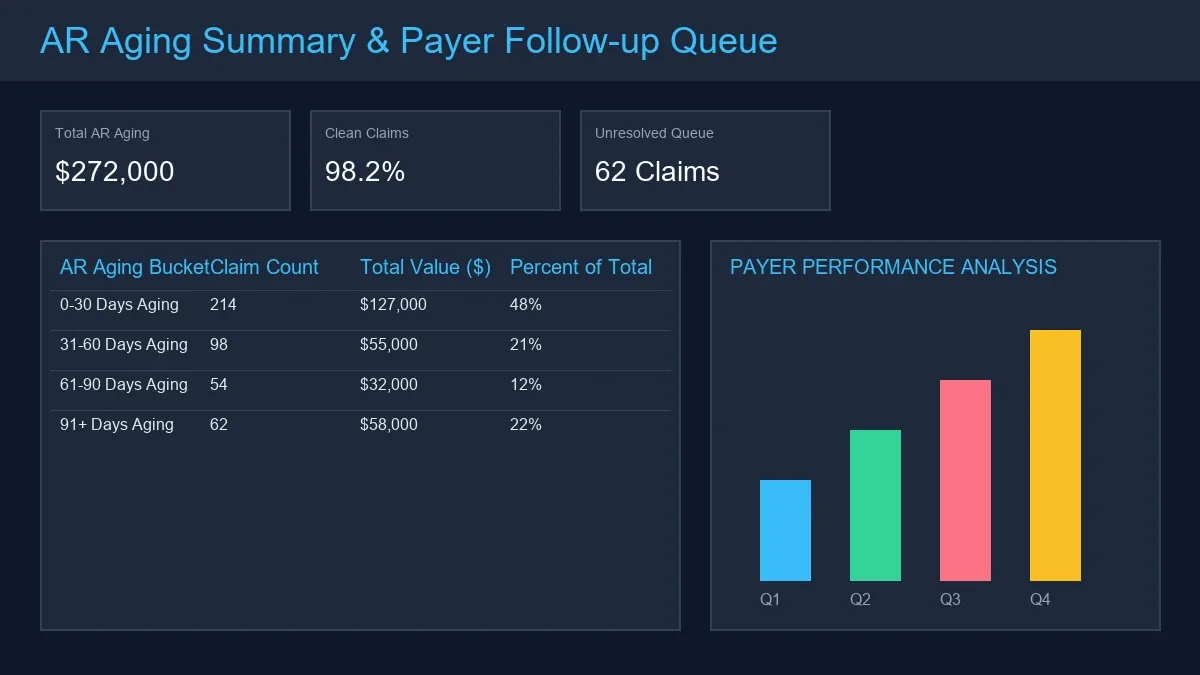
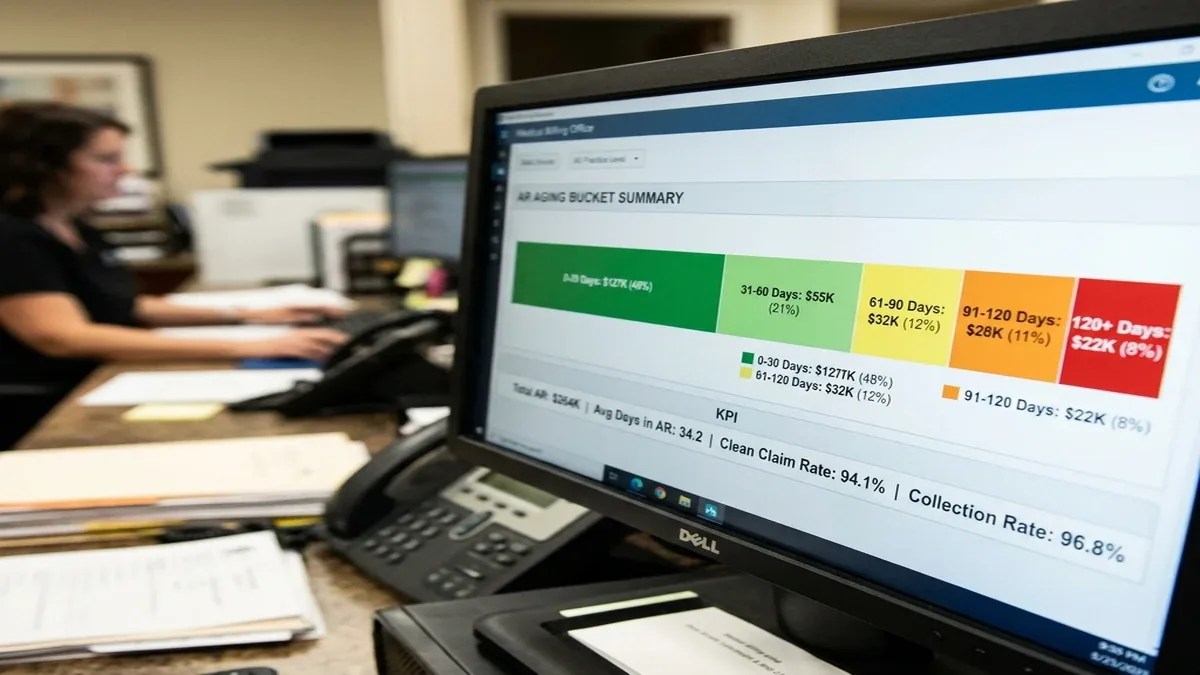
The AR aging report is reviewed daily and segmented by payer, date of service, and balance to prioritize follow-up on the highest-value and oldest claims first.
Payer Status Inquiry
Outstanding claims are followed up through payer web portals, EDI 276/277 transactions, or phone contact within payer-specific follow-up windows.
Resubmission and Additional Information
Claims pending additional information or documentation are responded to promptly with the requested materials and resubmitted for processing.
Denial Routing and Escalation
Denied claims are routed to the denial management workflow for root cause analysis and appeal, while still tracking the original AR entry.
Why This Matters for Your Revenue Cycle
AR aging is reviewed daily, not weekly or monthly, so no claim sits unaddressed for more than 24 hours.
Structured follow-up keeps average days in AR within the 30-day benchmark for healthy cash flow.
Any claim aging past 120 days is automatically escalated for senior review or formal appeal.
Follow-up workflows are designed to protect timely filing windows by ensuring no claim is lost in the queue.
Common Mistakes in Medical Billing Follow-Up
Waiting 60 or 90 Days Before First Follow-Up
Many practices wait 60 or 90 days before starting follow-up, by which point some payers have already passed the window for certain appeal rights. Follow-up should begin within 30 days of submission for most payers.
Following Up Without Payer-Specific Knowledge
Different payers have different processing timelines, portal systems, and required follow-up procedures. Generic follow-up calls without payer-specific knowledge waste time and produce less actionable information.
Treating All AR the Same Regardless of Age
Older claims are at greater risk and often require different strategies than recently submitted ones. AR follow-up must be prioritized by age and value, not by the order claims appear on a list.
Writing Off Claims Without an Appeal Attempt
Writing off denied claims without an appeal attempt is direct revenue loss. Many denials, including medical necessity and documentation denials, are overturned on appeal with proper supporting materials.
How Medsure RCS Manages Medical Billing Follow-Up
Priority-Based AR Management
Claims are prioritized for follow-up by payer, age, and balance size, ensuring the highest-value and most at-risk claims receive attention first.
Payer Portal and Phone Follow-Up
We follow up through payer-specific web portals, automated status inquiry transactions, and direct phone calls based on the most efficient method for each payer.
Claim Status Documentation
Every follow-up action and payer response is documented in the claim record, creating a complete timeline that supports appeals and audits.
Timely Filing Window Monitoring
We track timely filing deadlines by payer and prioritize any claims approaching their window to ensure no revenue is lost to preventable deadline expiration.
Medical Billing Follow-Up, Frequently Asked Questions
We review the AR aging report daily and follow up with payers on any claim that has not been acknowledged or paid within the expected processing window for that payer, typically 30 days for commercial and 14 to 21 days for Medicare.
Timely filing windows vary by payer. Medicare requires claims within 365 days of the date of service. Most commercial payers require 90 to 180 days. Some plans are as short as 60 days. We track each payer's specific window for every claim.
Claims that age past the timely filing window are denied as CO-29 and cannot be adjudicated. In some cases, we can appeal with documentation showing the claim was submitted on time but rejected or lost. Prevention through systematic follow-up is the only reliable solution.
We only recommend write-offs when all appeal options have been exhausted, the balance falls below the cost of continued pursuit, or the timely filing window is confirmed closed with no viable appeal. We present write-off recommendations to the practice with full documentation before any write-off is processed.
Ask About Medical Billing Follow-Up
Ready to Improve Your Medical Billing Follow-Up?
Talk to a Medsure RCS specialist. No commitment, no pressure, just answers.
Sign up for our newsletter to receive updates, industry news, and articles about medical billing and revenue cycle management.