

Medical Billing Audit Services
We conduct structured medical billing audits to identify coding errors, documentation gaps, and billing inefficiencies that affect reimbursement.
What a Medical Billing Audit Looks For
An audit compares what was documented, what was coded, and what was paid, then explains the gaps. It identifies where revenue is being lost to avoidable denials, underpayment against contracted rates, and charges that were never captured at all.
- Documentation, coding and payment compared claim by claim
- Underpayments against contracted rates identified
- Uncaptured charges traced back to the workflow step that lost them
- Denial patterns grouped by root cause rather than by code
Medical Billing Audit Explained
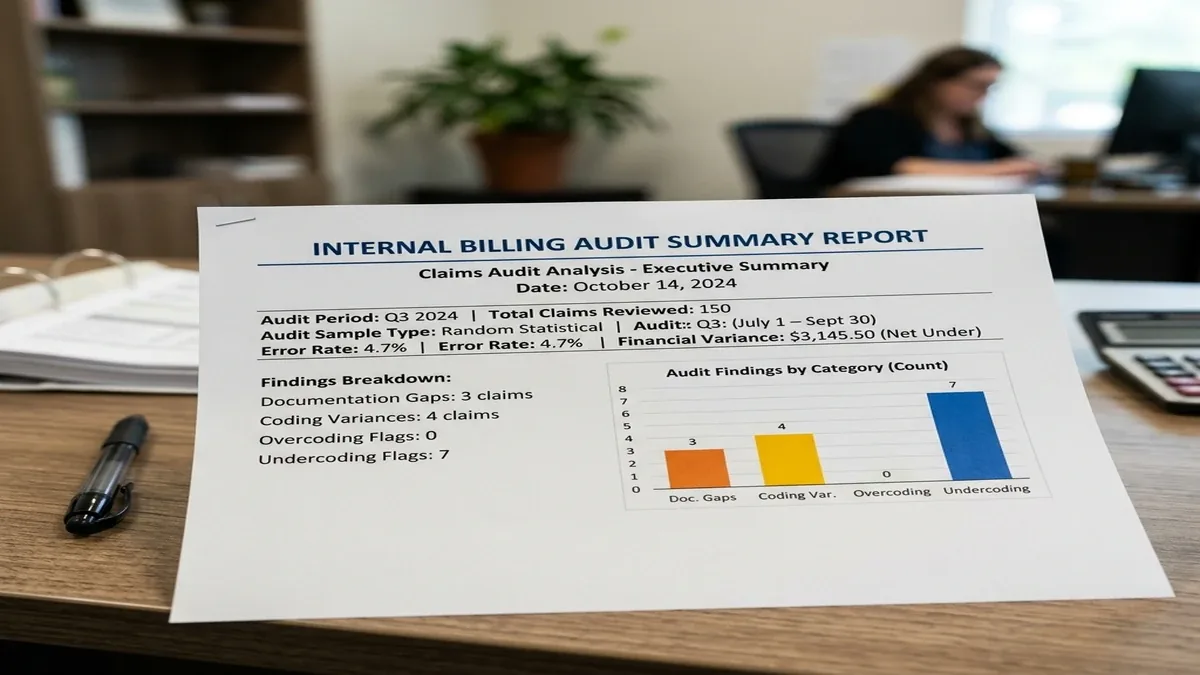
A medical billing audit is a structured review of billing records, claim submissions, and coding practices to identify errors, documentation gaps, and inefficiencies that affect reimbursement accuracy or create compliance exposure. Audits can be performed prospectively (before claims are submitted) or retrospectively (on claims already billed), and each serves a different purpose. The OIG publishes annual Work Plan priorities that identify the billing patterns federal auditors are actively targeting, making proactive internal audits a critical risk management tool.
Medsure RCS conducts billing audits for practices that want to identify revenue recovery opportunities, assess their current billing compliance, or prepare for an external payer or OIG audit. Our findings are presented with specific, actionable recommendations rather than generic observations. Patterns identified during an audit feed directly into upstream corrections across charge capture and coding workflows. Billing audit findings are coordinated with a medical coding audit and feed directly into improvements across your revenue cycle management program.
How It Works: Step by Step
Audit Scope Definition
We define the audit scope by date range, payer mix, service type, or provider, depending on the practice's goals and risk areas.
Claims and Documentation Review
Selected claims are reviewed against supporting clinical documentation to verify that services billed are documented, coded correctly, and at the appropriate level.
Error Pattern Analysis
Identified errors are categorized by type, payer, provider, and service to distinguish isolated mistakes from systemic patterns that require process changes.
Findings Report and Recommendations
Results are compiled into a findings report with specific error rates, revenue impact estimates, and recommended corrective actions for each identified issue.
Why This Matters for Your Revenue Cycle
Practices that complete a billing audit typically identify 5 to 15 percent in under-billed or incorrectly written-off revenue.
Most billing audits are completed within two to four weeks from scope definition to final report delivery.
All findings are grounded in the actual documentation, not coding assumptions or benchmarks.
We perform both prospective pre-billing audits and retrospective audits on submitted claims.
Common Mistakes in Medical Billing Audit
Auditing Only After a Payer Flags a Problem
Reactive audits that happen only after a payer or OIG inquiry find problems at the worst possible time. Proactive audits run on a scheduled basis allow practices to correct errors before external scrutiny.
Focusing on One Provider or Code
Narrowly scoped audits miss systemic issues affecting other providers, service types, or payers. A complete billing audit should cover a cross-section of the practice's full billing activity.
Not Following Up on Audit Findings
An audit that produces a report without an implementation plan for corrective action provides no value. Findings must be translated into specific workflow, coding, or documentation changes with defined timelines.
Using Audit Results Punitively
Audits that are used to discipline staff rather than improve systems undermine staff cooperation and reduce the quality of future audit information. The goal of a billing audit is process improvement, not fault assignment.
How Medsure RCS Manages Medical Billing Audit
Pre-Bill Prospective Audits
We review claims before submission to identify coding errors, missing documentation, and modifier issues that would trigger denials or audit scrutiny.
Retrospective Claims Review
We audit previously submitted claims to identify billing patterns, under-coding, and over-coding that may have affected reimbursement or compliance.
Provider-Level Benchmarking
Provider billing patterns are compared against specialty benchmarks to identify outlier behavior in either direction that warrants further review.
Corrective Action Plan Development
Each audit concludes with a specific corrective action plan that links findings to workflow, documentation, and coding changes with responsible parties and timelines.
Medical Billing Audit, Frequently Asked Questions
Best practice is a prospective audit of a sample of claims monthly and a comprehensive retrospective audit annually. Practices with high denial rates or new coders may benefit from more frequent reviews.
We review the alignment between clinical documentation and submitted codes, modifier use, diagnosis sequencing, place of service accuracy, and payer-specific billing rule compliance.
Yes. A retrospective audit often identifies claims that were denied in error, under-coded, or written off without a proper appeal. Those findings feed directly into a recovery appeals process.
They overlap but are not identical. A billing audit covers the full claim lifecycle including submission, follow-up, and payment posting. A coding audit focuses specifically on the accuracy of code assignment relative to documentation.
Ask About Medical Billing Audit
Ready to Improve Your Medical Billing Audit?
Talk to a Medsure RCS specialist. No commitment, no pressure, just answers.
Sign up for our newsletter to receive updates, industry news, and articles about medical billing and revenue cycle management.