

Revenue Cycle Audit Services
A revenue cycle audit assesses every stage of your billing process, from registration to payment, to find revenue leakage and process gaps.
What a Revenue Cycle Audit Examines
An audit follows money through the whole cycle rather than checking claims in isolation. It compares what was scheduled, documented, coded, billed and paid, then shows where the gaps are and which stage of the process created each one.
- Every stage from scheduling through payment examined in sequence
- Documentation, coding and payment compared claim by claim
- Underpayments and uncaptured charges quantified
- Findings tied to the specific process step that caused them
Revenue Cycle Audit Explained
A revenue cycle audit is a comprehensive evaluation of the entire billing process from patient registration through final payment. Unlike a focused medical billing audit or coding audit, a revenue cycle audit examines every stage of the cycle to identify where revenue is lost, where processes create delays, and where compliance risk exists across the entire operation.
Medsure RCS conducts revenue cycle audits for practices that want an honest assessment of their current billing performance, are preparing to change billing vendors, or are responding to significant changes in payer mix, volume, or regulatory environment. The OIG recommends proactive internal audits as a core component of any healthcare compliance program. Revenue cycle audit findings feed directly into improvements across the full revenue cycle management program.
How It Works: Step by Step
Front-End Process Review
We audit patient registration, eligibility verification, scheduling, and authorization workflows for data quality issues and process gaps.
Claims and Coding Review
A sample of submitted claims is reviewed for coding accuracy, documentation support, modifier use, and compliance with payer-specific billing guidelines.
AR and Denial Analysis
The AR aging profile and denial patterns are analyzed to identify revenue at risk, trending denial types, and follow-up gaps that allow claims to age unnecessarily.
Audit Report and Action Plan
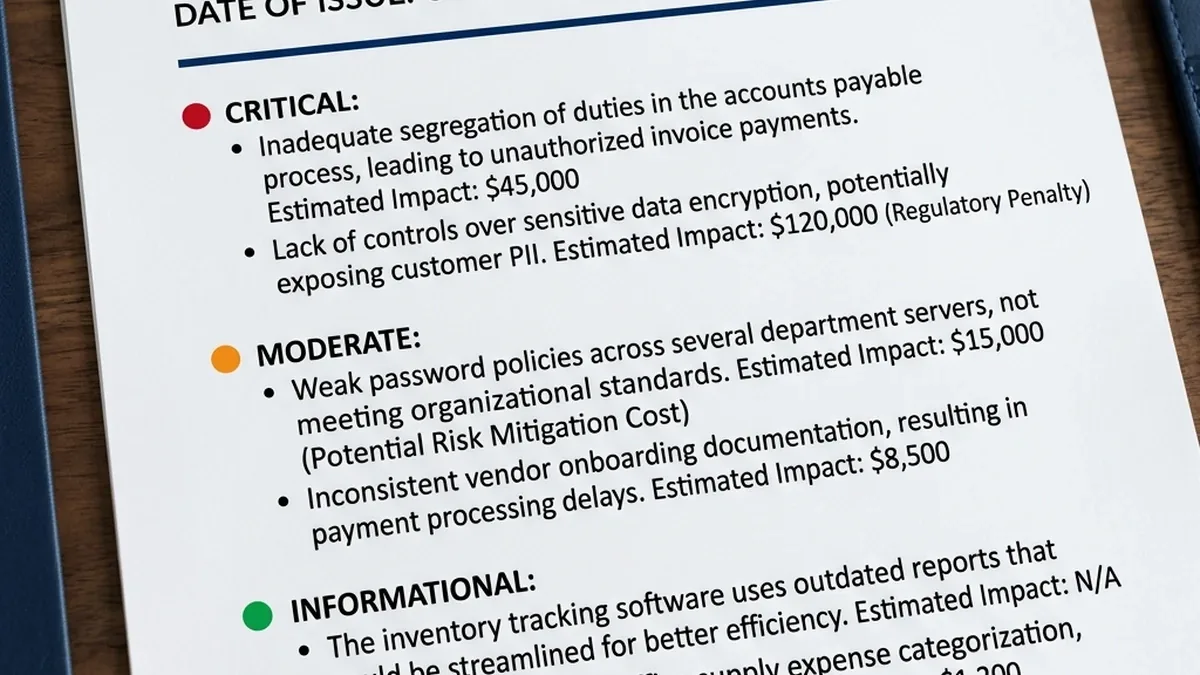
Findings are compiled into a prioritized report with estimated revenue impact and a specific action plan covering each identified process gap.
A complete revenue cycle audit is typically delivered within three to four weeks of engagement.
The audit covers every stage from registration through payment, not just claims or coding.
Findings are prioritized by revenue impact so the highest-value improvements can be implemented first.
An external audit surfaces issues that internal teams are too close to the process to see objectively.
Common Mistakes in Revenue Cycle Audit
Auditing Only When a Problem Is Already Obvious
By the time a revenue cycle problem is obvious from cash flow data, it has been building for months. Proactive audits identify developing problems while they are still correctable with minimal disruption.
Scoping the Audit Too Narrowly
An audit that looks only at coding or only at AR misses the connections between stages. Revenue cycle problems are rarely confined to a single step and often require systemic review to understand the full impact.
Receiving Findings Without Implementing Changes
A revenue cycle audit that produces a report without an implementation review process delivers zero value. The action plan must be treated as a working document, not a summary to be filed.
Using Current Staff to Audit Their Own Process
Internal audits of processes owned by the same team being audited produce incomplete findings. An effective revenue cycle audit requires independent reviewers who have no stake in the current workflow continuing unchanged.
How Medsure RCS Manages Revenue Cycle Audit
Full-Cycle Process Assessment
We evaluate every revenue cycle stage including registration, verification, scheduling, coding, claims submission, AR follow-up, denial management, and payment posting.
Documentation and Coding Sample Review
A statistically representative sample of claims is reviewed against supporting clinical documentation to assess coding accuracy and documentation compliance.
Denial Pattern and AR Analysis
We analyze denial reason code patterns and AR aging profiles to quantify revenue at risk and identify the specific process failures driving aging and denials.
Prioritized Implementation Roadmap
Audit findings are delivered with a prioritized implementation roadmap that sequences corrective actions by estimated revenue impact and ease of implementation.
Revenue Cycle Audit, Frequently Asked Questions
A billing audit focuses specifically on claim accuracy, code assignment, and submission processes. A revenue cycle audit is broader, covering everything from patient registration through final payment collection, including front-end intake, AR management, denial patterns, and reporting.
We examine registration data quality, eligibility and authorization workflows, coding accuracy, claim submission timing and clean claim rates, denial patterns and appeal rates, AR aging profiles, payment posting accuracy, and patient billing workflows.
We calculate revenue impact by analyzing denial rates against potential recovery rates, quantifying the value of claims aging past timely filing windows, and estimating under-coding impact by comparing coded levels against specialty benchmarks.
Yes. A revenue cycle audit before switching establishes the current baseline so you can measure improvement accurately after the transition. It also identifies what specific improvements you should be demanding from a new vendor.
Ask About Revenue Cycle Audit
Ready to Improve Your Revenue Cycle Audit?
Talk to a Medsure RCS specialist. No commitment, no pressure, just answers.
Sign up for our newsletter to receive updates, industry news, and articles about medical billing and revenue cycle management.