

Provider Re-Credentialing Services
Proactive provider re-credentialing services that track renewal deadlines, prepare applications, and submit ahead of payer windows to prevent billing gaps.
Why Re-Credentialing Deadlines Matter
Re-credentialing is routine until it is missed, at which point claims deny and the provider has to be re-enrolled rather than renewed. Deadlines arrive on payer schedules that do not align with each other, which is why they are easy to lose inside a busy practice.
- Renewal dates tracked across every payer on one schedule
- Applications prepared ahead of the deadline, not in response to denials
- Documentation refreshed before it expires
- Lapses prevented rather than remediated after claims stop paying
Provider Re-Credentialing Explained
Provider re-credentialing is the periodic renewal of an existing payer enrollment. Every payer, including Medicare, Medicaid, and commercial insurers, requires providers to reconfirm their credentials on a scheduled cycle, typically every two to three years. Unlike initial credentialing and enrollment, re-credentialing involves confirming that the provider's information is current, that licenses and malpractice coverage are active, and that there have been no adverse actions since the last review.
Medsure RCS manages re-credentialing proactively, tracking deadline dates across every active payer enrollment and initiating applications in advance of each payer's renewal window. Missed re-credentialing deadlines result in enrollment termination and billing interruptions that directly affect medical billing compliance and can take months to resolve. All enrolled providers are also cross-checked against the OIG exclusion list as part of each re-credentialing review. We keep CAQH profiles current as part of every re-credentialing cycle to prevent payer-level enrollment delays.
How It Works: Step by Step
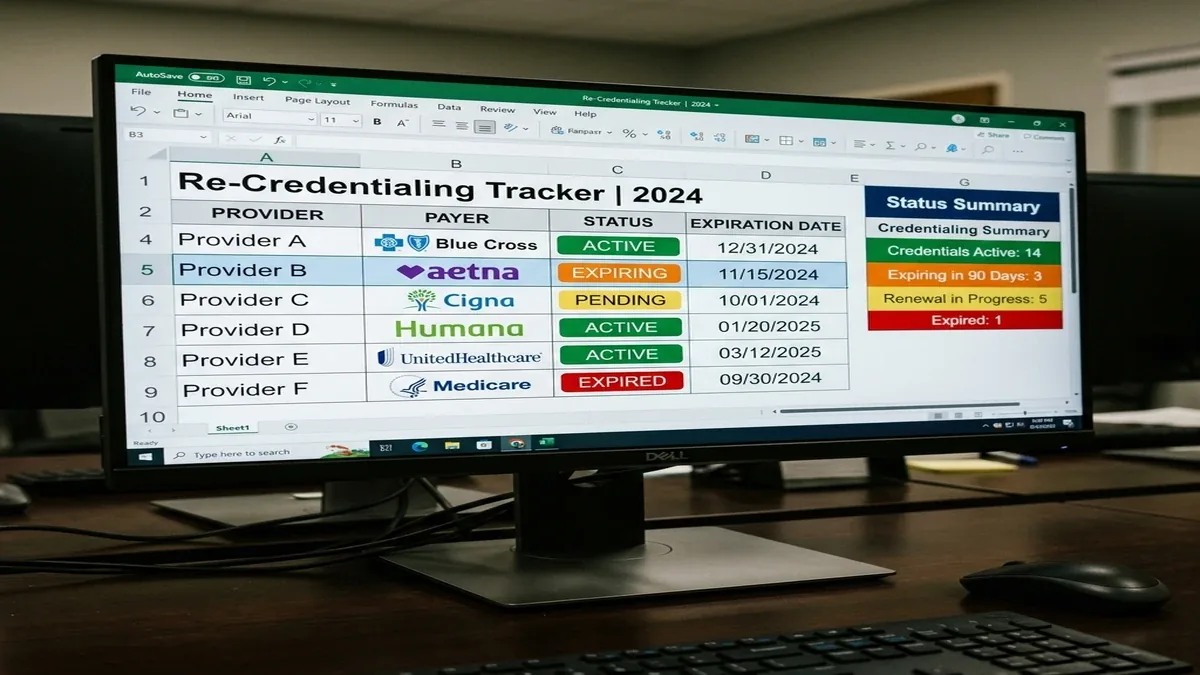
All active payer enrollments are tracked against their re-credentialing cycles, with reminder initiation at 90 days before each deadline.
Provider documents are reviewed for expiration, including medical license, malpractice insurance, DEA certificate, and board certifications.
re-credentialing applications or attestations are prepared with current information and submitted to each payer through the correct submission channel.
Re-credentialing approvals are confirmed and the new enrollment cycle dates are recorded in the provider's credentialing file.
Why This Matters for Your Revenue Cycle
Re-credentialing applications are initiated 90 days before each payer's deadline to allow time for document updates and payer processing.
Proactive deadline tracking eliminates billing interruptions caused by missed re-credentialing windows.
Re-credentialing deadlines across Medicare, Medicaid, and all commercial payers are tracked from a single system.
Expiring licenses, malpractice certificates, and DEA registrations are flagged before they lapse.
Common Mistakes in Provider Re-Credentialing
Waiting for Payer Notices Before Initiating Re-Credentialing
Some payers send re-credentialing notices; many do not. Relying on receiving a payer notice before starting the re-credentialing process is unreliable and results in lapses when notices are lost or sent to outdated addresses.
Letting Supporting Documents Expire Before Re-Credentialing
Re-credentialing applications require current documents. If a medical license or malpractice certificate has expired, the re-credentialing application will be rejected. Document expiration dates must be tracked alongside enrollment renewal dates.
Treating Re-Credentialing as an Annual Task Instead of Continuous
Different payers have different renewal cycles. Some renew every two years, others every three. Treating re-credentialing as an annual task rather than a continuous tracking system creates gaps for payers with non-annual cycles.
Not Reporting Adverse Events to Payers During the Credentialing Period
Most payer contracts and enrollment agreements require providers to report adverse events, licensure issues, or changes in practice information between credentialing cycles. Failure to report can result in retroactive termination of the enrollment.
How Medsure RCS Manages Provider Re-Credentialing
Multi-Payer Re-Credentialing Calendar
We maintain a complete calendar of re-credentialing deadlines across all active payer enrollments for every provider, with automated tracking and 90-day advance alerts.
Document Expiration Monitoring
Medical licenses, malpractice certificates, DEA registrations, and board certifications are tracked with expiration alerts sent before documents lapse.
Application Preparation and Submission
Re-credentialing applications are prepared with current provider information and submitted through each payer's required channel before the deadline.
Adverse Event Reporting Coordination
We advise providers on payer notification requirements for adverse events or practice changes that occur between credentialing cycles.
Provider Re-Credentialing, Frequently Asked Questions
Re-credentialing cycles vary by payer. Medicare revalidation is typically every five years. Most commercial payers re-credential every two to three years. Florida Medicaid MCOs generally re-credential every two years. Each payer has its own schedule, which must be tracked independently.
The payer terminates the enrollment. The provider can no longer bill that payer for services. Reinstatement typically requires a new application and a full credentialing review, which can take the same amount of time as the original enrollment, meaning months of lost billing.
No. CAQH ProView requires attestation every 120 days to keep the profile active. Commercial payer re-credentialing is a separate process that the payer initiates on their own cycle. Current CAQH data supports the re-credentialing process but is not a substitute for it.
Yes. Multi-provider tracking is core to our re-credentialing workflow. We maintain individual tracking records for every provider in a group and coordinate all applications through a single managed workflow.
Ask About Provider Re-Credentialing
Ready to Improve Your Provider Re-Credentialing?
Talk to a Medsure RCS specialist. No commitment, no pressure, just answers.
Sign up for our newsletter to receive updates, industry news, and articles about medical billing and revenue cycle management.