

Prior Authorization Denial Management
Prior authorization denial management in Florida. Denial review, clinical documentation, and targeted appeals to recover revenue.
Why Authorization Denials Are Hard to Reverse
Authorization denials are usually procedural rather than clinical: the approval was missing, expired, or did not match the service billed. Once the service is delivered without a valid authorization, recovery depends on whether the payer allows a retroactive request at all.
- Denials separated into missing, expired and mismatched authorizations
- Retroactive requests pursued where the payer permits them
- Peer-to-peer review used where clinical justification exists
- Authorization tracking corrected so the gap does not repeat
Prior Authorization Denial Management Explained
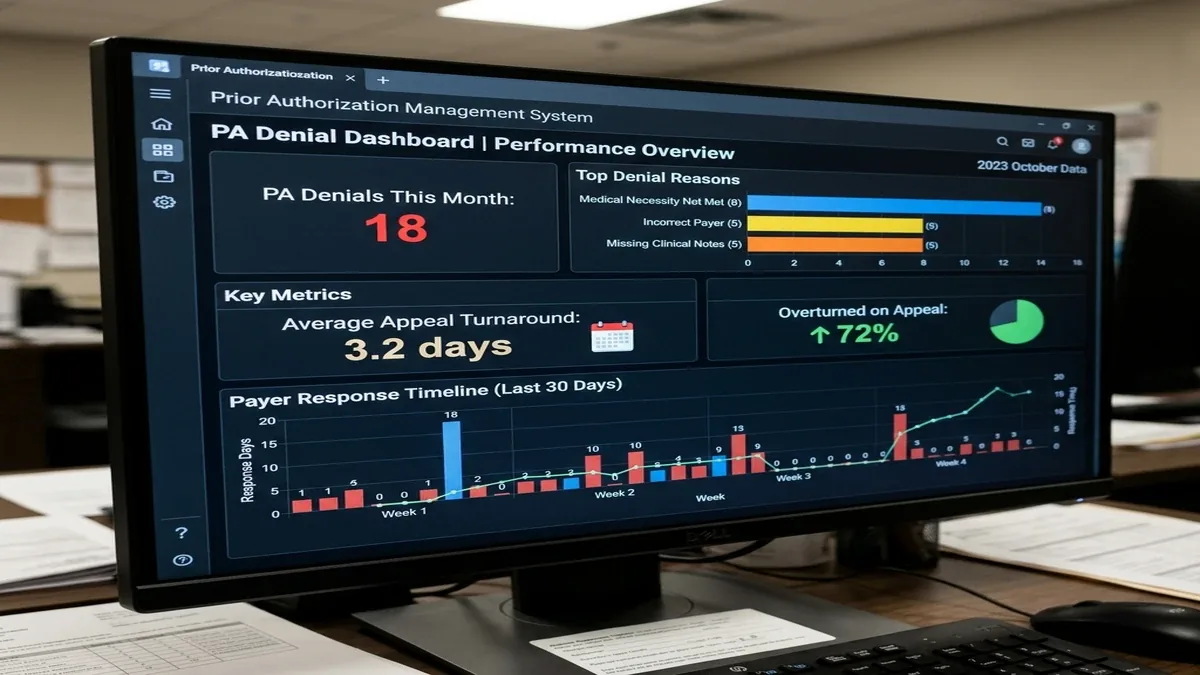
Prior authorization denials occur when a payer denies a claim on the grounds that the service required prior authorization that was not obtained, or when a previously requested prior authorization is denied because the payer determined the service does not meet their medical necessity criteria. These are among the most frustrating denials because they often involve services that are clinically appropriate and well-documented, and often overlap with medical necessity denials that require separate clinical arguments.
Medsure RCS manages prior authorization denials through a combination of appeal preparation, peer-to-peer review coordination, and retrospective authorization requests where payers allow them. We also implement front-end workflows that prevent authorization denials from occurring in the first place by ensuring PAs are obtained before services are rendered, in alignment with CMS coverage requirements. PA denial appeals follow the same process as insurance denial appeals, using clinical documentation and peer-to-peer requests as the primary tools. The remittance code to look for on these claims is CO-15, which identifies a missing or invalid authorization number.
How It Works: Step by Step
Denial Reason Analysis
Each prior auth denial is categorized by reason: authorization not obtained, authorization insufficient for service rendered, or clinical necessity not established.
Appeal Documentation Compilation
Clinical records, treatment history, specialist notes, and applicable clinical guidelines are compiled to support the appeal for medical necessity.
Written Appeal Submission
A written appeal is prepared with clinical evidence, applicable CPT and diagnosis codes, and the specific payer criteria that are met by the clinical documentation.
Peer-to-Peer Review Coordination
When written appeals fail or are not the right first step, we coordinate a peer-to-peer review between the treating physician and the payer's medical director.
Why This Matters for Your Revenue Cycle
PA denial appeals are initiated the same day the denial is received to protect appeal filing windows.
We coordinate peer-to-peer physician reviews for clinically appropriate denials that need direct medical discussion.
When payer policy allows, we file retroactive authorization requests for urgent or emergent situations.
PA tracking workflows prevent the majority of authorization denials from occurring.
Common Mistakes in Prior Authorization Denial Management
Accepting Prior Auth Denials Without Appeal
Many prior authorization denials are overturned on appeal when additional clinical documentation is provided or when the treating physician participates in a peer-to-peer review. Writing off a PA denial without attempting an appeal is lost recoverable revenue.
Submitting Appeals Without Clinical Supporting Documentation
An appeal that argues a service was clinically appropriate without providing the clinical records that demonstrate it will not succeed. PA denial appeals must be accompanied by the notes, test results, and treatment history that establish medical necessity.
Not Requesting a Peer-to-Peer Review When Available
Peer-to-peer review is one of the most effective tools for overturning prior auth denials, particularly for procedures denied by a payer reviewer who lacks the full clinical context. Not every practice knows to request it, but most payers are required to offer it.
Not Filing for Retroactive Authorization in Urgent Cases
When an urgent or emergent service was rendered without prior authorization because the patient's condition did not allow time for the request, many payers allow a retroactive authorization request. Not filing for retroactive authorization in these situations results in an unnecessary denial.
How Medsure RCS Manages Prior Authorization Denial Management
PA Denial-Specific Appeal Preparation
Appeals are built specifically for the prior authorization denial type: insufficient clinical necessity, wrong procedure code on PA, or authorization not obtained, each requiring different documentation and arguments.
Clinical Record Compilation
We gather and organize the clinical records, specialist notes, prior treatment history, and supporting evidence needed to establish medical necessity in the payer's review framework.
Peer-to-Peer Review Scheduling
When peer-to-peer review is the appropriate escalation, we identify the payer's process, schedule the call, and prepare the treating physician with the clinical arguments and payer criteria relevant to the denial.
Retroactive Authorization Requests
When payer policy allows retroactive authorization for urgent situations, we prepare and submit the request with clinical documentation supporting the emergent or urgent nature of the service.
Prior Authorization Denial Management, Frequently Asked Questions
Most prior authorization denials can be appealed. Payers are generally required to offer at least one level of internal appeal for denied authorization requests. The success of the appeal depends on the clinical documentation, the specific payer criteria, and whether the service was medically appropriate under any reasonable clinical standard.
A peer-to-peer review is a direct conversation between the treating physician and the payer's medical director about a specific denied prior authorization. It should be requested when the denial appears to be based on incomplete clinical information or a misunderstanding of the clinical situation that a direct medical conversation can resolve.
Claims for services rendered without a required prior authorization are denied for lack of authorization. The options depend on the payer and circumstances: retroactive authorization may be available for emergent situations; otherwise the appeal process is limited. This is why PA prevention workflows are so important.
Most commercial payers must respond to standard prior authorization appeals within 30 days under federal and state regulations. Urgent authorization requests must be decided within 72 hours. Medicare Advantage plans follow federal timelines under the Medicare Advantage regulations.
Ask About Prior Authorization Denial Management
Ready to Improve Your Prior Authorization Denial Management?
Talk to a Medsure RCS specialist. No commitment, no pressure, just answers.
Sign up for our newsletter to receive updates, industry news, and articles about medical billing and revenue cycle management.